
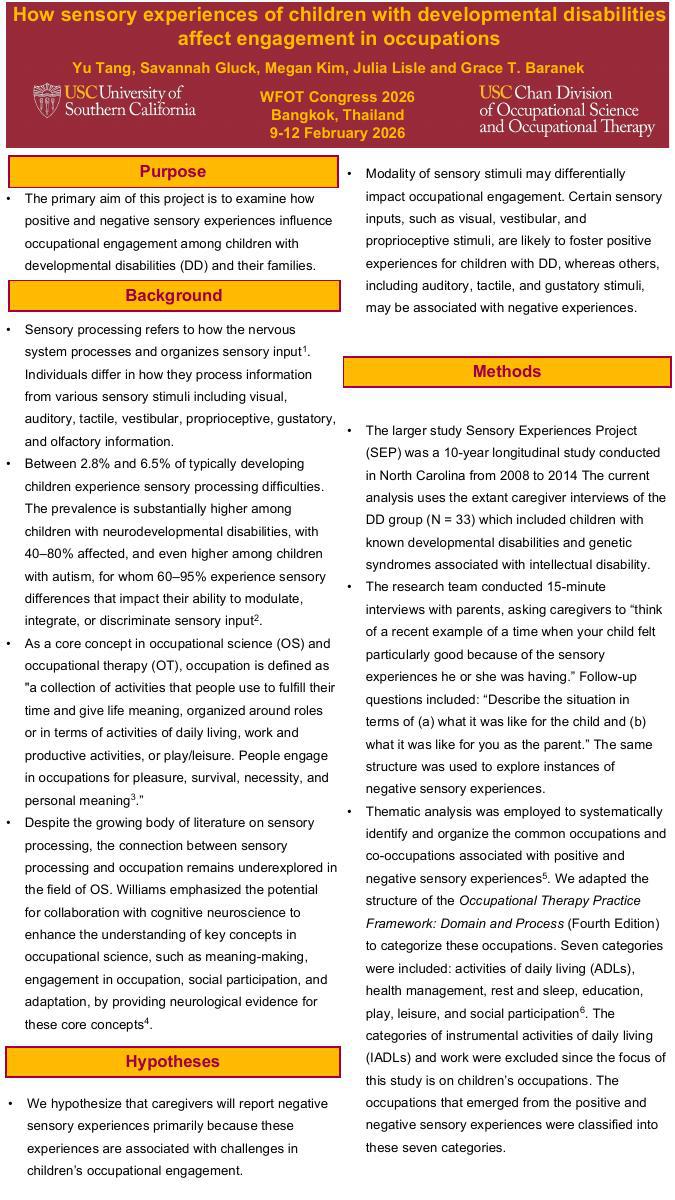
Introduction / Rationale: Research shows that 40–80% of children with neurodevelopmental disabilities and 60–95% of those with autism experience sensory differences that affect their ability to modulate, integrate, or discriminate sensory input. While sensory processing is increasingly studied, its connection to key concepts in occupational science—such as engagement in occupation and social participation remains underexplored.
Objectives: This study aims to identify children and family occupations influenced by the positive and negative sensory experiences.
Methods / Approach: Thematic analysis was applied to extant data from qualitative interviews (N = 33) with caregivers of children with known developmental disabilities. We adapted the nine categories of occupations identified in the Occupational Therapy Practice Framework: Domain and Process (Fourth Edition) and quantified the reported occupations within these categories.
Results / Practice Implications: The most frequently reported occupation was Activities of Daily Living (ADLs) (26 instances), with 18 examples linked to negative and 8 to positive sensory experiences. Play was the second most reported occupation (20 instances), exclusively associated with positive sensory experiences. Social participation was reported 9 times, always in connection with negative sensory experiences. Leisure was reported 5 times, with one instance linked to a negative experience. Health management was reported 3 times, all tied to negative sensory experiences.
Conclusion / Significance: Challenges in engagement in occupations during negative sensory experiences align with previous findings in OTOS. To better achieve holistic care through the 'just-right' challenge, occupations associated with positive experiences should also be incorporated into interventions and daily life.