
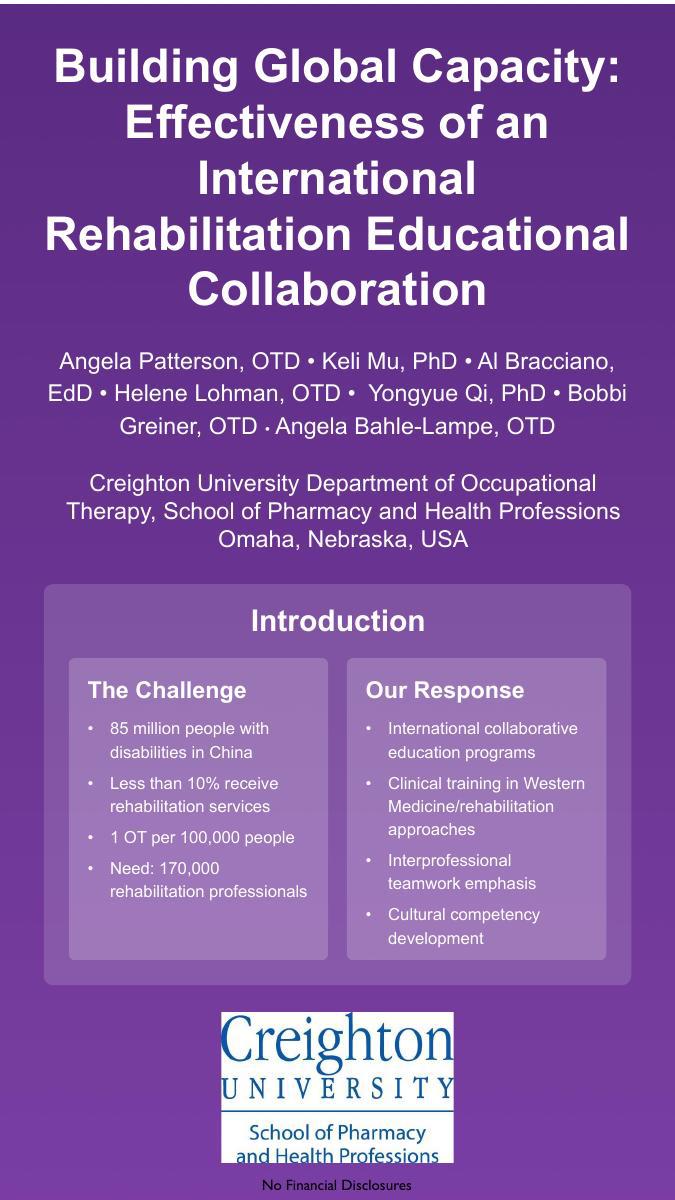
Introduction / Rationale: The severe shortage of rehabilitation personnel in China, particularly occupational therapists and physical therapists, has led to less than 10% of individuals with disabilities receiving rehabilitation services. International collaborative education programs offer a potential solution to help meet China's growing rehabilitation needs through development and advanced training of rehabilitation personnel including clinical knowledge and skills, teamwork and interprofessional skills and cultural competency.
Objectives: To evaluate the impact of an international visiting rehabilitation student program on participants' development of clinical knowledge and skills, teamwork and interprofessional work, and cultural competency. To provide a framework for future collaborative international rehabilitation education programs.
Methods / Approach: A mixed-methods study examined outcomes of a rehabilitation international summer program at a university in the U.S.A. over a seven year period. The rehabilitation summer program combined didactic coursework, clinical observations, and cultural immersion experiences. Quantitative data was collected using the Team Skills Scale (TSS) and Cultural Competence Health Practitioner Assessment (CCHPA) in a pre/post-test design. Qualitative data was gathered through focused interviews with participants.
Results / Practice Implications: Participants (n=58) showed significant improvements in team skills (p<0.001) and cultural competency (p<0.001). Qualitative findings revealed enhanced understanding of clinical knowledge and skills, teamwork and interprofessional practice, and cultural awareness. Participants reported improved ability to integrate evidence-based practices and interprofessional collaboration into their future practice in China.
Conclusion / Contribution to the occupational therapy profession: International immersion programs can effectively prepare rehabilitation professionals from developing countries and countries with emmerging rehabilitation professions through enhanced professional knowledge and skills, cultural competency, and healthcare teamwork skills. This model provides a framework for developing sustainable international educational collaborations to address global rehabilitation workforce needs.