
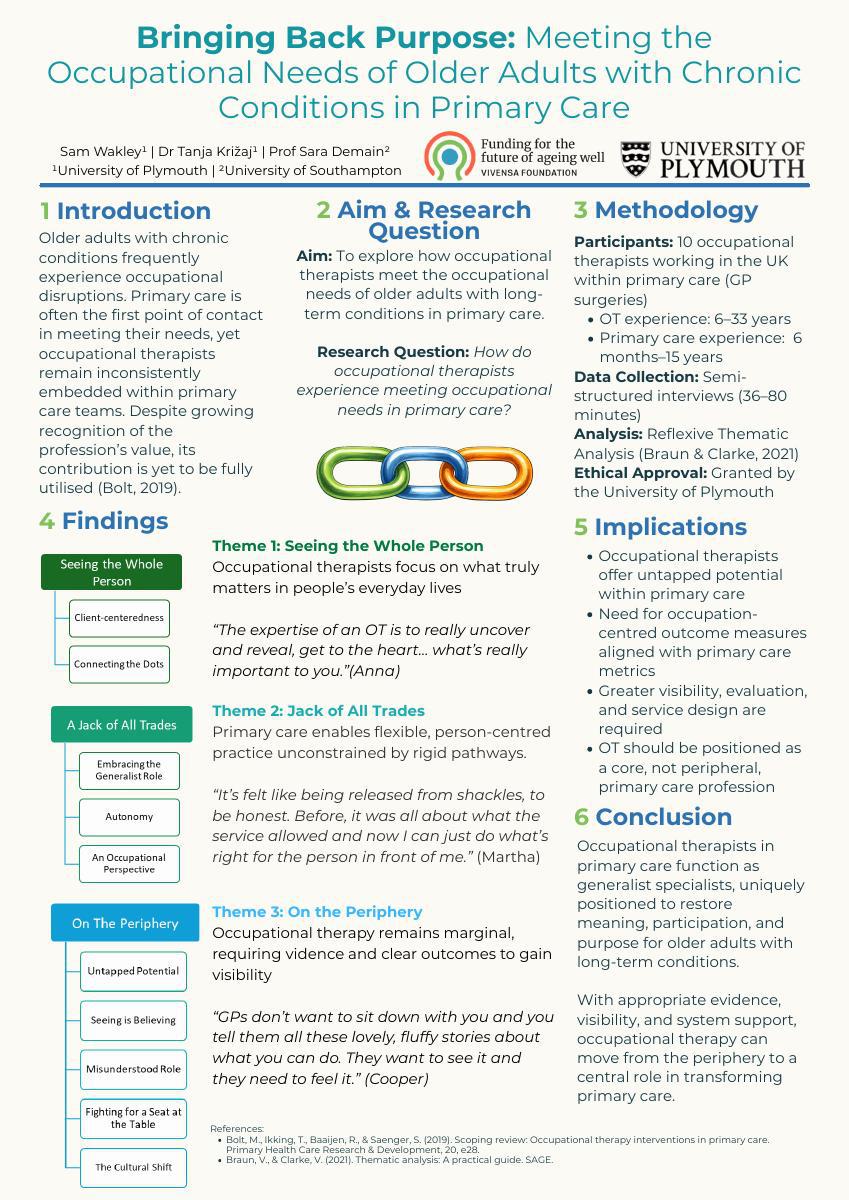
Introduction / Rationale: Older adults living with chronic conditions face barriers to continuous and successful participation in everyday life. Primary care is the first port of call for those experiencing occupational disruptions however, occupational therapists are not yet a fully embedded member of the primary care team. Despite growing awareness in the strength of the profession for chronic conditions management within primary care, we have yet to fully embrace it’s therapeutic potential.
Objectives: To explore how primary care occupational therapists meet the occupational needs of older adults living with chronic conditions.
Methods / Approach: 10 interviews were conducted with occupational therapists to understand their experience of addressing occupational needs within primary care.
Results / Practice Implications: Occupational therapists saw alignment to the generalist model of primary care design and experienced positive perceptions of being a ‘jack of all trades’ within the role. Despite assurances in their ability to navigate the complexity of meeting occupational needs within primary care, perceived barriers to integration were acknowledged, alongside a lack of research and outcomes measures to support the role and ensure occupational needs were adequately addressed.
Conclusion / Significance to the Occupational Therapy profession: Occupational Therapists feel well positioned to offer a significant and innovative approach to primary care. Evidence is required to reinforce these findings alongside designing outcome measures that fit the needs of the patients and the service agenda. Continued research in this contemporary practice area is warranted to develop awareness of an occupational approach to primary care.