
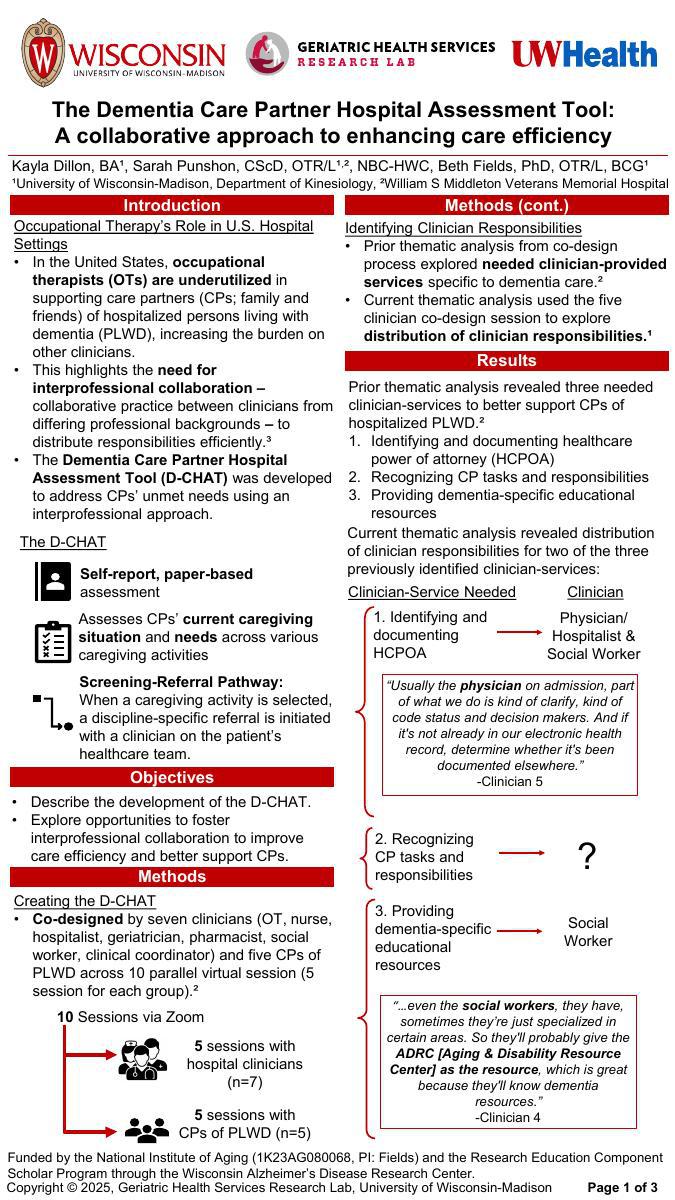
Introduction/Rationale: In the United States, occupational therapists (OTs) are underutilized in supporting carers of hospitalized persons living with dementia (PLWD), increasing the burden on other clinicians. This highlights the need for interprofessional collaboration to distribute responsibilities efficiently. The Dementia Care Partner Hospital Assessment Tool (DCHAT) was developed to address carers’ unmet needs through an interprofessional approach.
Objectives: Describe the development of the DCHAT and its role in fostering interprofessional collaboration between OTs and other clinicians to improve care efficiency and better support carers of hospitalized PLWD.
Methods/Approach: The DCHAT was co-designed by seven clinicians (OT, nurse, hospitalist, geriatrician, pharmacist, social worker, clinical coordinator). Descriptive analyses detailed the tool’s items, while thematic analysis explored clinician-provided services that align with OT scope of practice.
Results/Practice Implications: The final tool includes twelve items assessing carers’ needs. Thematic analysis revealed overlapping services, such as nurses educating carers on activities of daily living—an area within OT scope— alongside nursing-specific tasks.
Conclusion/Significance to the Occupational Therapy Profession: Findings highlight opportunities for interprofessional collaboration to optimize role distribution and improve care efficiency. The DCHAT enables OTs to improve hospital-based care and support carers of PLWD through collaboration with other clinicians. This approach allows each clinician to focus on their unique roles, potentially improving overall care efficiency. While some services may overlap across clinical practices, recognizing and respecting each profession’s unique contributions fosters effective interprofessional collaboration. Future research should explore scaling carer-centered, interprofessional tools like the DCHAT in hospital settings both within the United States and globally.