
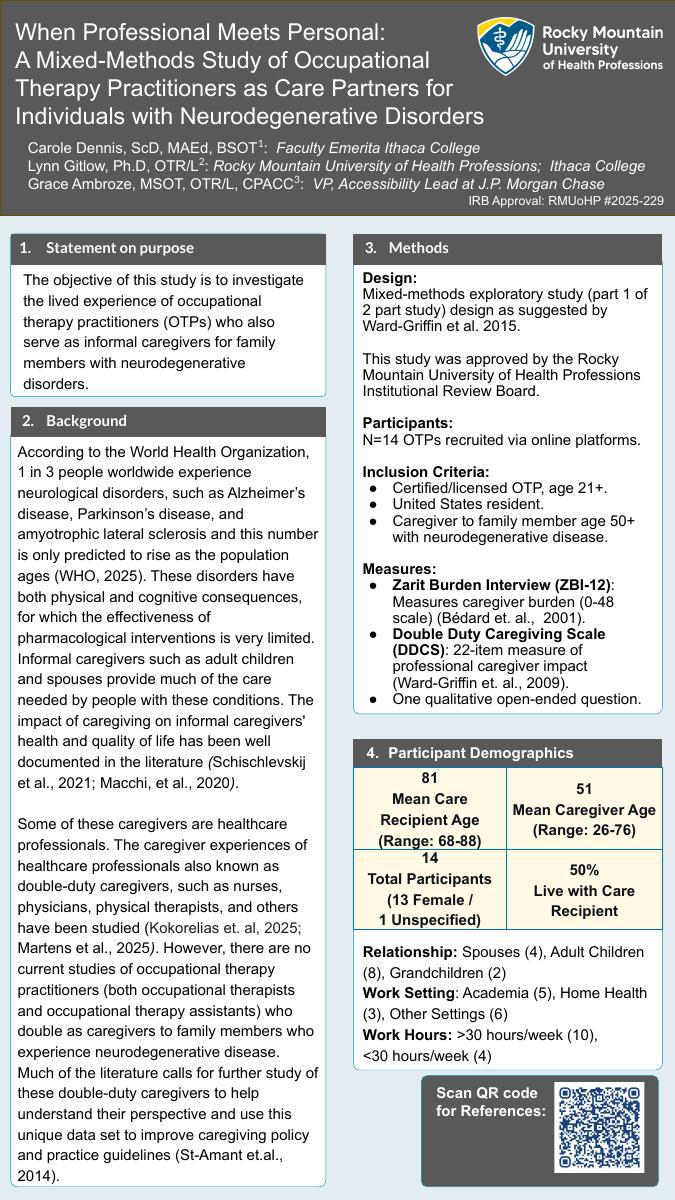
Introduction/Rationale: Neurodegenerative disorders, including Alzheimer’s disease, Parkinson’s disease, and amyotrophic lateral sclerosis, affect over 50 million people worldwide, with prevalence expected to rise as populations age. Occupational therapists are instrumental in helping people to maintain independence in their work, daily living, and socialization, but for many people with neurodegenerative disorders, occupational therapy is frequently not included in the care team. Given the limited effectiveness of pharmacological interventions, much of the care burden falls on family members, particularly spouses and adult children. While the impact of caregiving on family well-being is well-documented, no studies have explored the unique experiences of occupational therapy practitioners (OTPs) who simultaneously serve as informal care partners for loved ones with these conditions.
Objective: This study examines the lived experiences of OTPs who balance professional expertise with personal caregiving responsibilities for family members with neurodegenerative disorders.
Methods/Approach: Using a mixed-methods design, this research investigates the insights and strategies OTPs employ in their dual roles. Findings will inform how occupational therapy can evolve to better support both individuals with neurodegenerative disorders and their care partners.
Results/Practice Implications: The study’s findings will contribute to innovative, evidence-based occupational therapy interventions that enhance the quality of life for both clients and caregivers.
Conclusion/Significance to Occupational Therapy: By exploring the intersection of professional and personal caregiving, this study will inspire innovative practice approaches, shaping the future of occupational therapy to better address the needs of those affected by neurodegenerative conditions.