
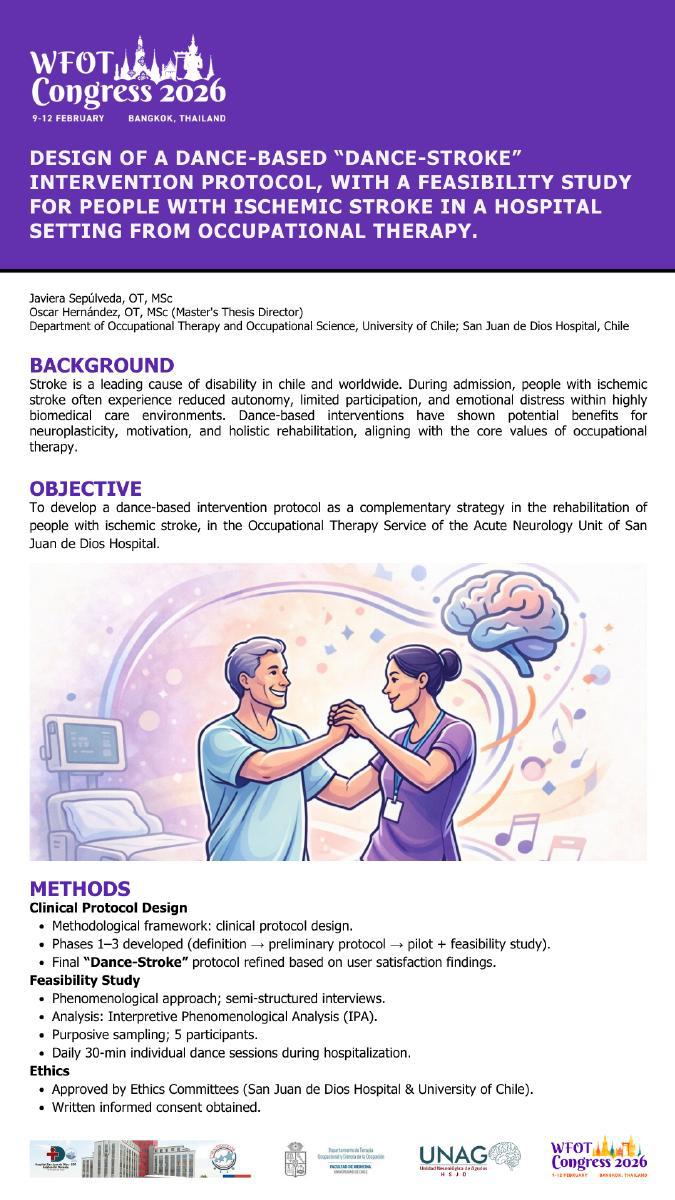
Introduction: The stroke is a significant problem worldwide and in Chile, with high rates of disability and mortality. Hospitalized people have alterations in their occupational participation. Dance favors neuroplasticity.
Objective: To develop an intervention protocol based on dance as a complementary strategy in the rehabilitation of people with ischemic stroke, from Occupational Therapy, in the Acute Neurological Unit of the San Juan de Dios Hospital.
Methods: A clinical protocol design model was used, including a feasibility study for the final drafting of the document. This study focused on user satisfaction from a phenomenological perspective. Semi-structured interviews were conducted, whose data were analyzed through an Interpretive Phenomenological Analysis (AFI). Five people participated in the study, who received daily individual dance sessions, guided by an occupational therapist during their hospital stay.
Results: The official “Dance-Stroke” intervention document was drafted, which allows each dance session to be configured according to parameters of safety, functionality, autonomy and volition. The feasibility study showed a high level of satisfaction in people with stroke sequelae, due to its inclusive design, the promotion of the volitional process and the possibility of inhabiting the subjective experience of the body in a biomedical environment.
Conclusion: The “Dance-Stroke” protocol is viable for the public health system, improving the hospital experience and generating a high level of satisfaction through humanized care. In addition, the relevance of the therapeutic relationship and other fundamental identity aspects of the profession are emphasized.