
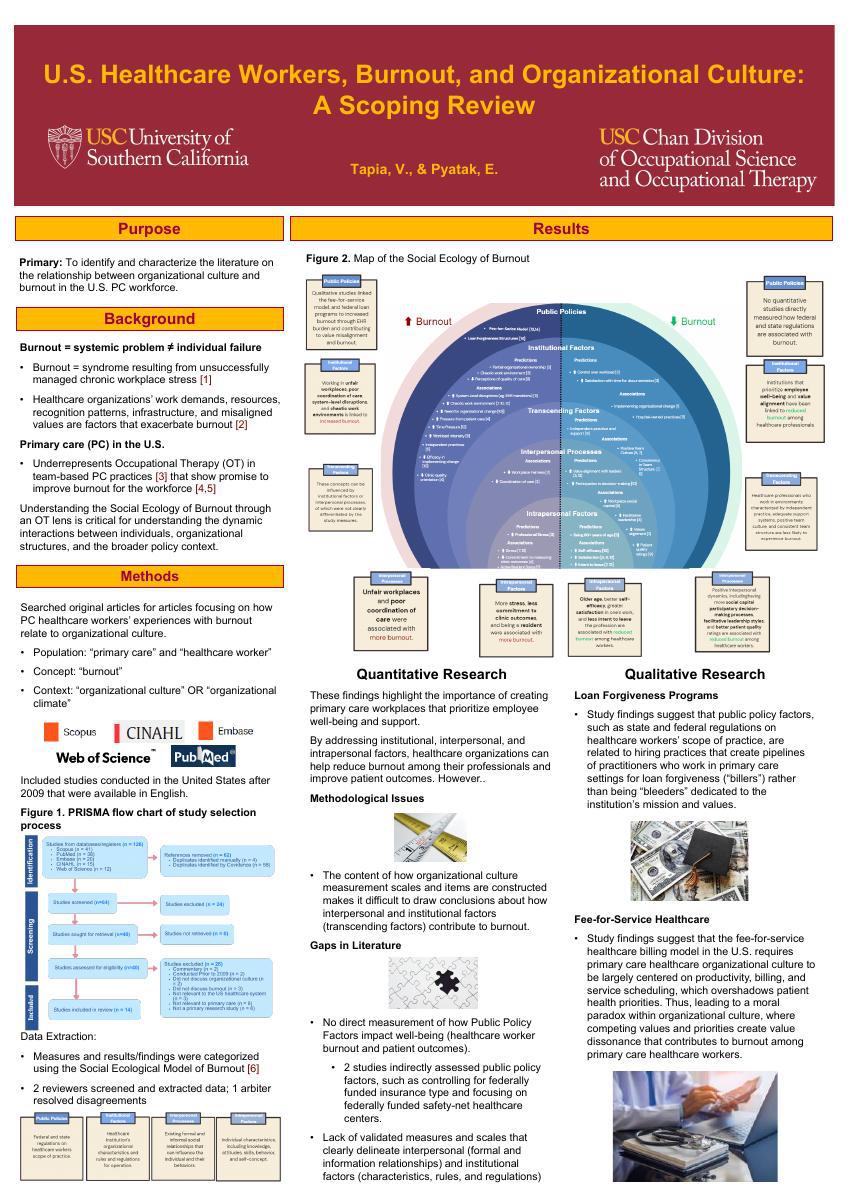
Introduction / Rationale: Primary care (PC) and work/industry are emerging areas for the occupational therapy (OT) workforce, and burnout is a pressing concern that affects overall healthcare worker well-being. Understanding burnout in PC from a social-ecological perspective can translate to medical settings where OTs are employed.
Objectives: To identify and characterize the literature on the relationship between organizational culture and burnout in the U.S. PC workforce.
Methods / Approach: A scoping review is being carried out, including original peer-reviewed studies published in English (2009-2024) from Pubmed, Scopus, EMBASE, CINHAL, and Web of Science databases. Three reviewers independently screened studies and are extracting and categorizing findings according to the Social Ecology of Burnout Framework (intrapersonal, interpersonal, institutional, and public policy factors).
Results / Practice Implications: Of the 126 studies imported, 15 studies were included; two categories are presented in the preliminary analysis:
Interpersonal Processes: High participation in decision-making reduced burnout likelihood by 64%, indicating its protective role.
Institutional Factors: Departments with high busyness or stress were twice as likely to experience burnout-related emotional exhaustion, emphasizing the impact of workload on burnout. Burnout-related emotional exhaustion was linked to a greater perceived need for change but lower support and efficacy in implementing changes. Burnout-related personal accomplishment was associated with both a need for change and self-efficacy in implementing changes.
Conclusion / Contribution to the occupational therapy profession: These findings emphasize the role of interpersonal processes and institutional factors in shaping burnout experiences. For OTs, this underscores the need to advocate for participatory decision-making, develop workload management strategies, and support organizational change initiatives to enhance self-efficacy among healthcare professionals.