
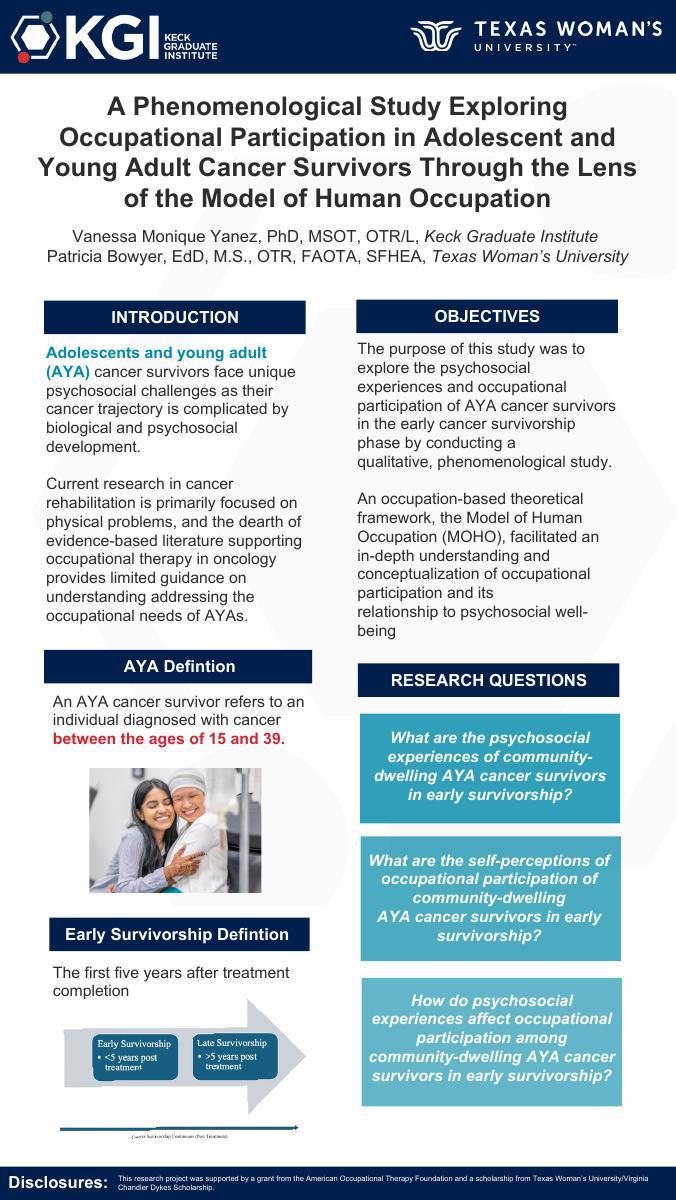
Cancer is a significant global health issue, with an estimated 20 million new cases in 2022, projected to rise by 77% by 2050. As the third leading cause of death worldwide, cancer survivors face long-term effects—chronic pain, fatigue, cognitive impairment—that disrupt daily functioning and hinder occupational participation. Adolescent and young adult (AYA) cancer survivors, ages 15-39, represent a unique, underserved population in oncology. They experience poorer outcomes compared to pediatric and geriatric groups due to gaps in cancer care, including inequities in access to rehabilitation and holistic support.
AYA survivors report challenges during a crucial developmental period, including difficulties returning to work or school, gaining independence, and starting a family. While much cancer rehabilitation research focuses on physical issues, it often neglects the occupational needs of AYA survivors. The lack of evidence-based literature on occupational therapy (OT) in oncology exacerbates these gaps, leaving AYA survivors without comprehensive support.
This phenomenological study explored the occupational participation of community-dwelling AYA cancer survivors in survivorship. Using the Model of Human Occupation (MOHO), reflexive thematic analysis (N=9) revealed barriers and facilitators to participation and the process of rebuilding occupational identity. The findings highlight the need for OT, aimed at improving participation and fostering a positive occupational identity, as AYA cancer survivors may not return to their pre-cancer baseline. By using an occupation-based framework, such as MOHO, OT practitioners can address the unique occupational needs of AYAs and minimize the significant disruptions in daily life, reducing health inequities and improving survivorship outcomes.