
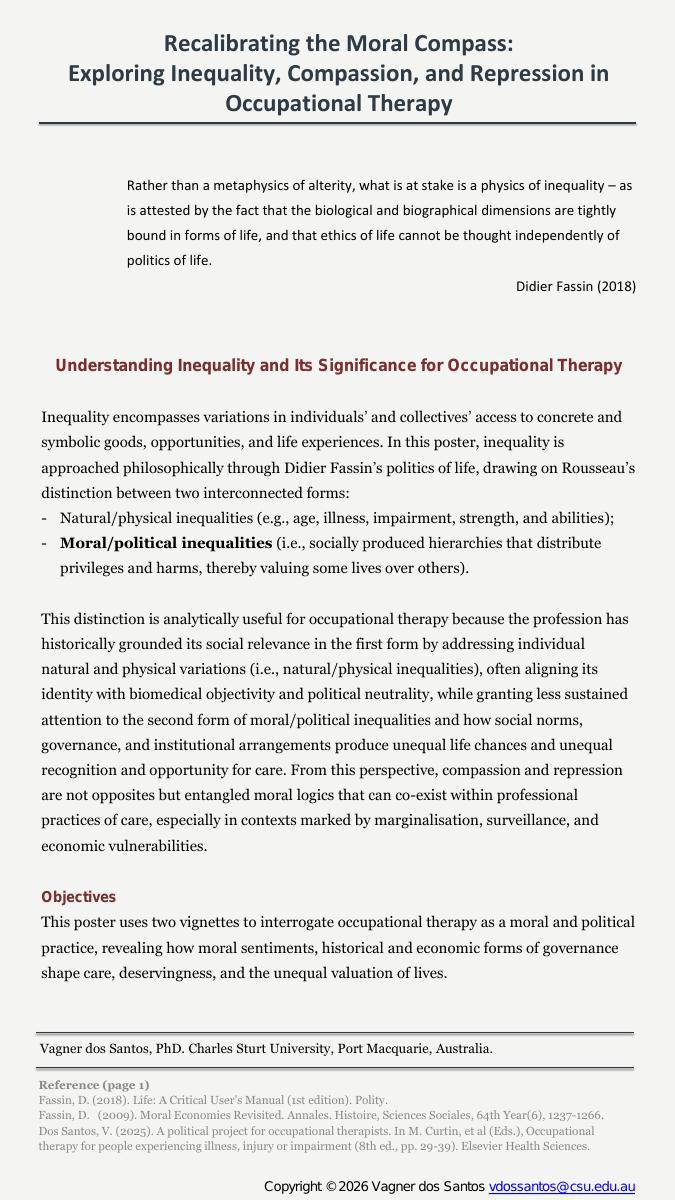
Introduction: This paper examines the impact of moral and political inequalities on human life. Rather than focusing solely on the occupational implications of inequality, it explores the ethics and meaning of life itself. The historical trajectory of occupational therapy, from its origins in the Progressive Era to its later alignment with conservative institutions and neoliberal economics, illustrates how moral and political inequalities have been embedded in the profession’s ethical stance toward life itself.
Objectives: Building on Didier Fassin’s exploration of inequality and the moral compass shaping human actions, including professional attitudes, this paper examines how compassion and repression (or acts of control) manifest in occupational therapy theory and practice.
Approach: Using the framework of moral economies, historical and contemporary case studies—drawing from fieldwork in marginalized communities, prisons, and mental health institutions—illustrate how occupational therapy has been shaped by, and at times complicit in, systemic inequalities. This approach fosters reflective dialogue, encouraging practitioners to question normative assumptions about the profession’s role in addressing inequities.
Results: By exposing the links between moral and political inequalities and the value attributed to human life—and consequently, to occupations—this paper argues for a politically engaged practice. The analysis reveals that inequalities compromise human dignity. Acknowledging the profession’s entanglement with power structures enables therapists to move beyond complicity with repression and toward transformative practices.
Conclusion: By critically examining moral sentiments in occupational therapy, this paper advocates for a more ethically grounded, historically informed, and politically conscious practice committed to compassionate care.