
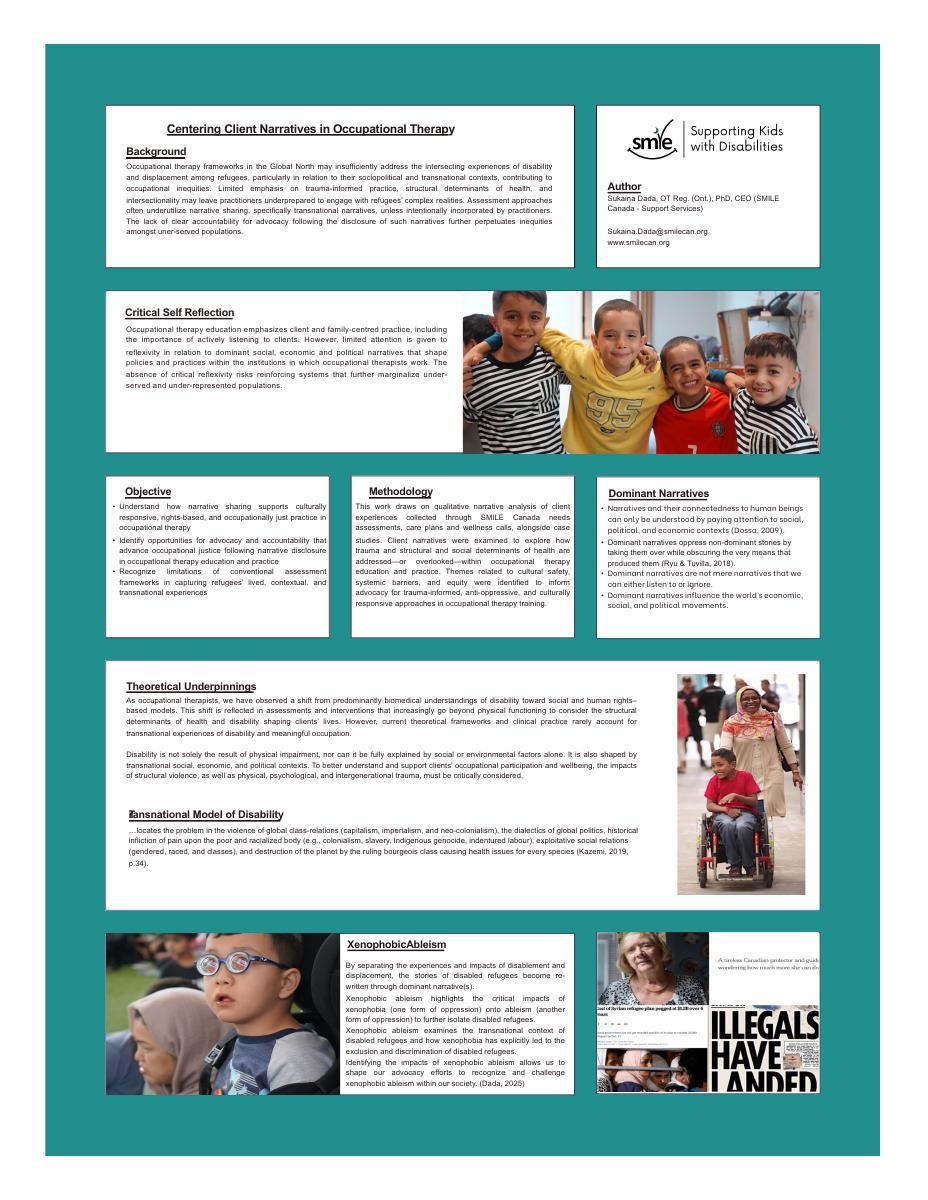
Introduction: Occupational therapy frameworks often fail to address the complex realities of disabled refugees, reinforcing a limited view of disablement and displacement. Gaps in education surrounding trauma, social determinants of health, and intersectional oppression leave therapists unprepared to meet the needs of displaced populations. The absence of culturally responsive, trauma-informed frameworks leads to inequitable clinical practices where refugee voices are frequently disregarded.
Objectives: This presentation identifies gaps in OT education that hinder effective care for disabled refugees. It emphasizes the need to integrate cultural safety, anti-oppressive frameworks, and trauma-informed care into both education and practice. It aims to encourage healthcare professionals to actively listen to refugees’ lived experiences, recognizing the significant impact of trauma on occupational performance.
Methods: Through a qualitative narrative approach and case studies, this presentation explores the lack of emphasis on trauma and social determinants of health in occupational therapy education. It advocates for incorporating culturally responsive, anti-oppressive, and trauma-informed frameworks into the training of occupational therapists to promote inclusive, equitable care.
Practice Implications: The absence of culturally responsive, trauma-informed care leads to the dismissal of refugee narratives, hindering equitable healthcare. This presentation calls for a reevaluation of occupational therapy curricula to better equip therapists to address the challenges faced by displaced populations. By prioritizing refugee stories, therapists can improve care and outcomes for disabled refugees.
Conclusion: This session urges the profession to reassess its frameworks and the dominant narratives guiding practice. Integrating trauma-informed care, cultural safety, and anti-oppressive frameworks will foster a more inclusive and equitable healthcare system, advancing occupational therapy and social justice in healthcare.