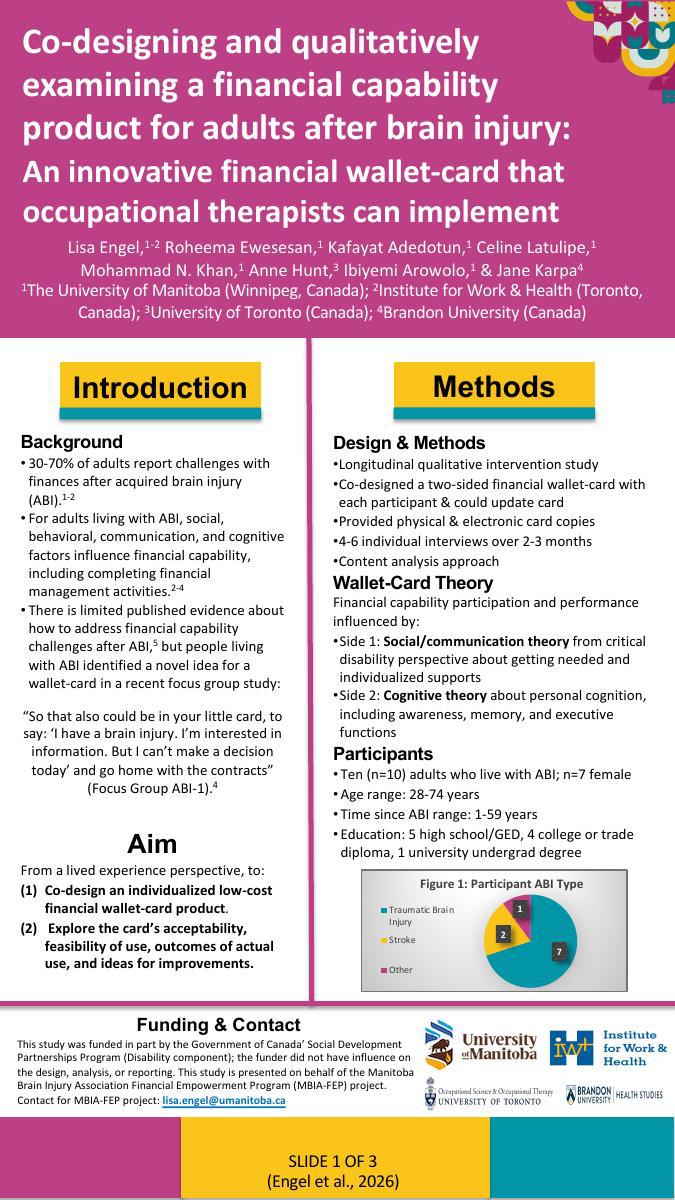
Introduction: Acquired brain injury (ABI) often reduces capability in financial-related occupations. Yet, there is limited research about intervention products to address financial capability after ABI.
Objectives: Our aims were to (1) co-design an innovative, low-cost financial capability assistive product and (2) explore the product’s acceptability, feasibility, use outcomes, and ideas for improvement.
Methods: We conducted a pilot longitudinal qualitative intervention study that included 10 adults living with ABI (n=7 women; post-ABI range: 1-59 years). With each participant, we co-designed an individualized two-sided financial wallet-card. One side displayed social-cues for others, while the other side contained personal financial-related reminders. Participants received physical and electronic card versions. To explore its use, participants completed four to six individual interviews over two to three months, and we analyzed transcripts using content analysis.
Results: Eight participants expressed acceptance of their individualized card at their final interview. Acceptability reasons included empowerment in the co-design process and feeling the card fit into their daily life. Nine participants discussed worries about potential negative reactions of others. All participants noted self-efficacy or cognitive factors as feasibility barriers. Nine identified feasibility facilitators including card convenience and flexibility. Positive use outcomes included feeling empowered or validated (n=9), changing personal behaviours (n=9), and changing others’ behaviours (n=8). Improvements suggested included addressing organizational affiliation public awareness (n=3), improving electronic access (n=3), and changing physical card materials (n=2).
Conclusion: Our results provide initial effectiveness evidence. A financial wallet-card could be a cost-effective and scalable product for financial capability interventions in occupational therapy.
