
Introduction: Research have focussed on wheelchairs users’ access to minibus taxis, either as the primary focus of the study or as a theme that emerged when exploring access to services such as health care.
Objective: The review focussed on the question: What are the barriers and facilitators African wheelchair users experience when using minibus taxi services?
Methods: The scoping review was conducted following the Preferred Reporting Items for Systematic Reviews and Meta-Analysis guideline for reporting on scoping reviews (PRISMA-ScR) as well as the updated Joanna Briggs Institute (JBI) guideline for conducting the scoping reviews.
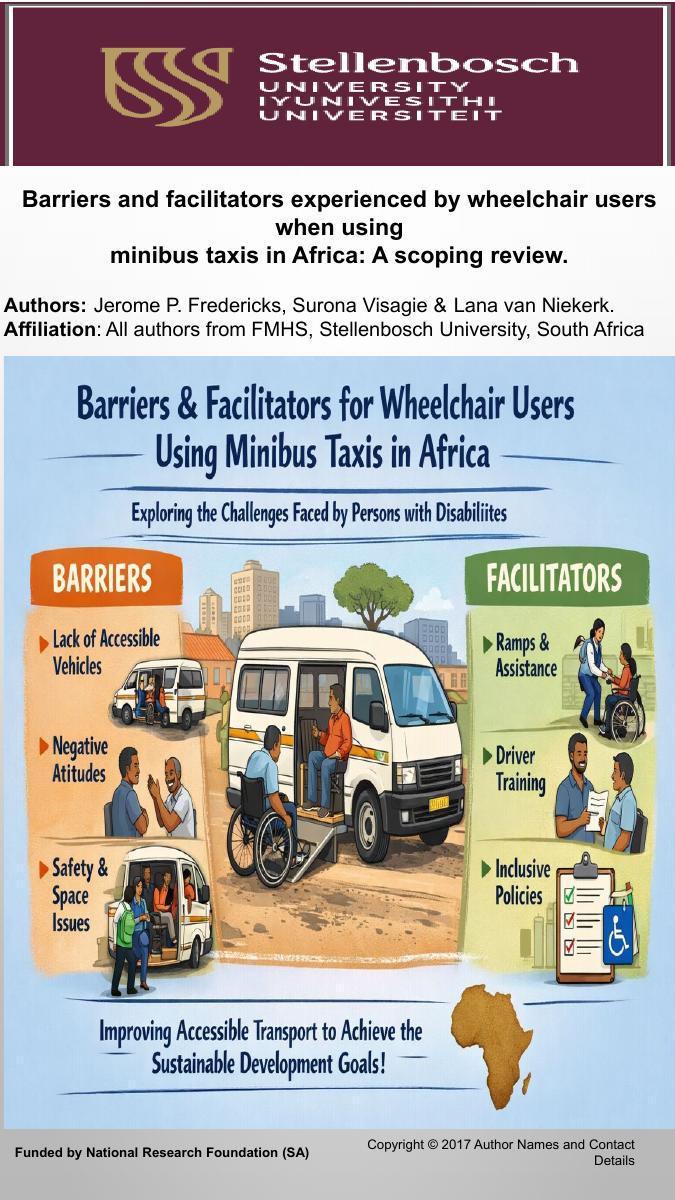
Results: Twenty studies were included. The barriers and facilitators African wheelchair users experience when using minibus taxis, were identified, reported and categorised in terms of structural (obstructed sidewalks, potholes, no kerb cuts), mechanical (the design of the minibus taxi), economic (fares, paying for wheelchairs and carers), attitudinal (impatience, rudeness), and institutional (ableism and lack of political will).
Conclusions: The questions that remain are, `Can the transport services offered by minibus taxis be reconfigured to provide access for wheelchair users? ` And if yes, `How can that be done?’ These two questions and the collaborative processes needed to answer them drove the current study.
Contribution to the occupational therapy profession: Identifying research in the field and to describe the barriers and facilitators African wheelchair users experience when using minibus taxi services.