
Introduction: Limitations in performing P-ADL are a frequent consequence following stroke. Previous research has shown effect of specific training in P-ADL, but it does not specify by which intensity this is achieved.
Objective: To investigate if stroke patients who receive intensified rehabilitation in P-ADL, become more independent in performing P-ADL, compared with patients who receive the usual intervention.
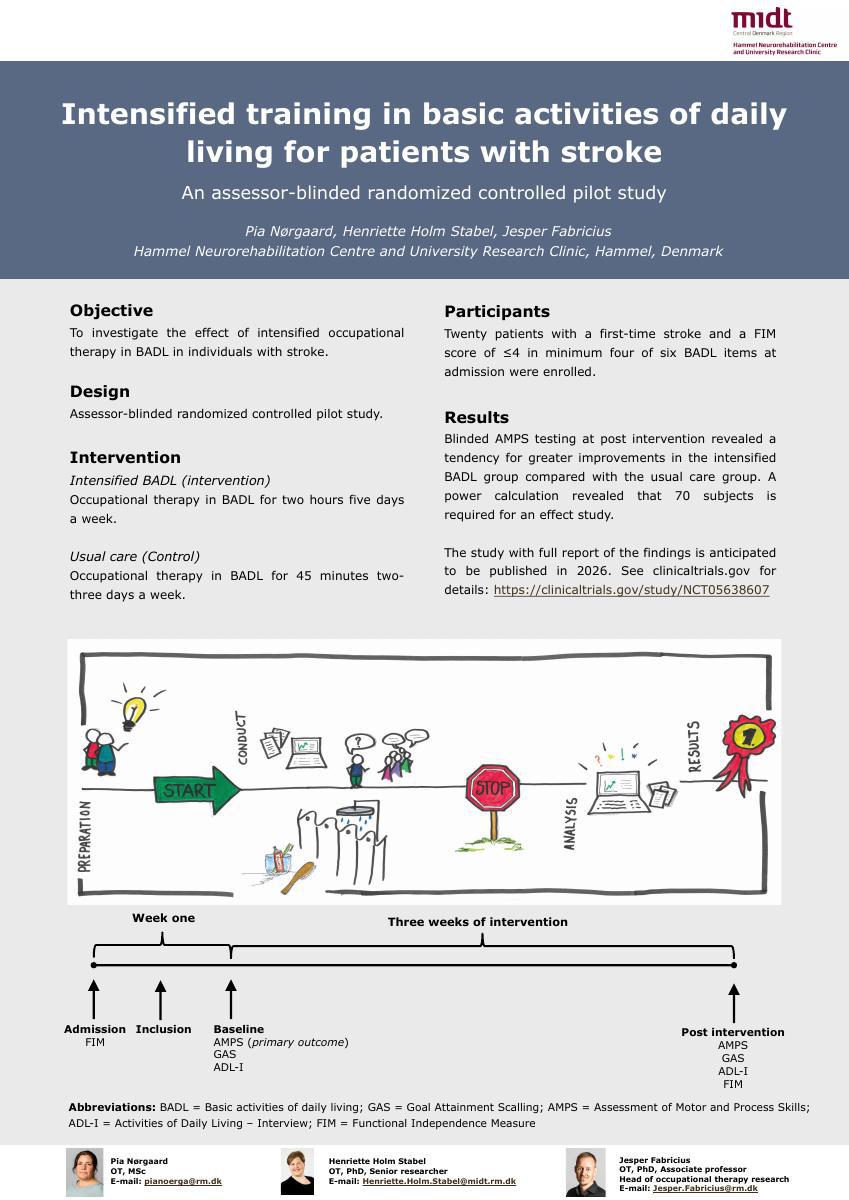
Methods: An assessor-blinded randomized controlled pilot study in an inpatient sub-acute rehabilitation hospital covering rehabilitation of patients with acquired brain injury. Eligible patients should have a first-time stroke and should display difficulties in P-ADL assessed with the Functional Independence Measure (FIM®). A total of 10 patients in the intervention group received two hours of occupational therapy in P-ADL, Monday to Friday, and 10 patients in the control group received one hour of occupational therapy in P-ADL two to three times a week. The rest of the weekdays, P-ADL in the control group was supported by nurses or healthcare assistants. The intervention lasted three weeks and encompassed dressing, grooming, showering, and eating breakfast. Treatment fidelity was documented after each session. The primary outcome is the Assessment of Motor and Process Skills (AMPS). Secondary outcomes are the ADL Interview, Goal Attainment Scaling, and the FIM. All outcomes were measured before randomization and following the intervention. AMPS was completed by a blinded occupational therapist by end of intervention.
Results and conclusion: A total of 17 of 20 subjects have been enrolled, and results and conclusion will be ready for presentation at the WFOT Congress in 2026.