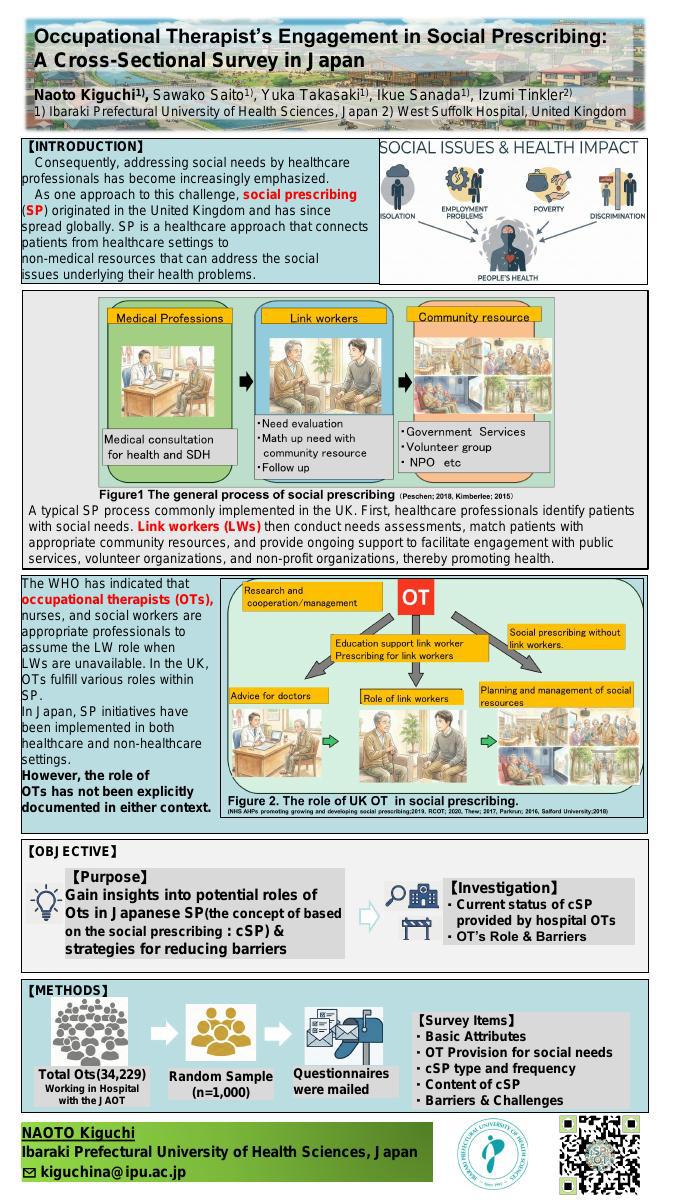
Introduction: Social prescribing (SP), a health intervention connecting individuals with community resources, is increasingly recognized worldwide. Occupational therapists (OTs) are encouraged to engage in SP, with similar practices emerging in Japan. However, the extent of OTs' involvement in SP remains unclear. A study examined the interventions based on the concept of SP by Japanese OTs. This study aimed to survey the status of interventions based on the concept of SP by Japanese OTs.
Methods: A questionnaire was distributed to 1,000 randomly selected clinical OTs from the Japan Association of OTs. We surveyed SP interventions and their barriers.
Results: 315 responses were analyzed. The sample had a mean experience of 11.45 years (SD = 7.21). Over 75% OTs work in inpatient settings for individuals with physical disabilities. More than 85% had experience with SP through social problem assessments or interprofessional collaboration. Of those, 44% assessed social problems daily, and 48% collaborated with other professionals for SP at least monthly. A significant correlation was found between SP frequency and social problems assessments. No significant differences were found between high- and low-frequency SP groups regarding hospital affiliation or patient demographics. However, high-frequency SP practitioners expressed greater concerns regarding time constraints, resource accessibility, collaboration with physicians, and limited community resources.
Discussion: Many Japanese OTs have experience with social prescribing, and nearly half engage in it frequently. SP implementation tends to be influenced by individual OT factors rather than institutional environments. To encourage SP, it is suggested that structured systems be developed, physician collaboration strengthened, and community resource availability improved.
