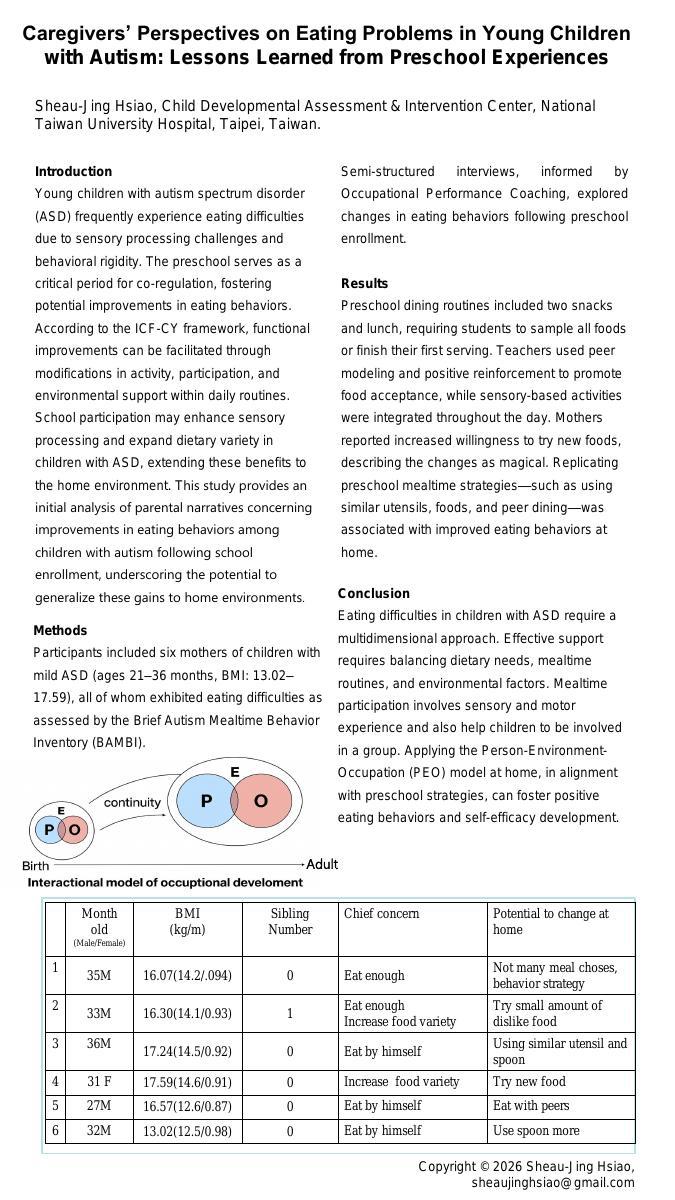
Introduction: Young children with autism spectrum disorder (ASD) frequently experience eating difficulties due to sensory processing challenges and behavioral rigidity. The preschool serves as a critical period for co-regulation, fostering potential improvements in eating behaviors. According to the ICF-CY framework, functional improvements can be facilitated through modifications in activity, participation, and environmental support within daily routines. School participation may enhance sensory processing and expand dietary variety in children with ASD, extending these benefits to the home environment.
Methods: Participants included six mothers of children with mild ASD (ages 21–36 months, BMI: 13.02–17.59), all of whom exhibited eating difficulties as assessed by the Brief Autism Mealtime Behavior Inventory (BAMBI). Semi-structured interviews, informed by Occupational Performance Coaching, explored changes in eating behaviors following preschool enrollment.
Results: Preschool dining routines included two snacks and lunch, requiring students to sample all foods or finish their first serving. Teachers used peer modeling and positive reinforcement to promote food acceptance, while sensory-based activities were integrated throughout the day. Mothers reported increased willingness to try new foods, describing the changes as magical. Replicating preschool mealtime strategies—such as using similar utensils, foods, and peer dining—was associated with improved eating behaviors at home.
Conclusion: Eating difficulties in children with ASD require a multidimensional approach. Effective support requires balancing dietary needs, mealtime routines, and environmental factors. Applying the Person-Environment-Occupation (PEO) model at home, in alignment with preschool strategies, can foster positive eating behaviors and self-efficacy development.