
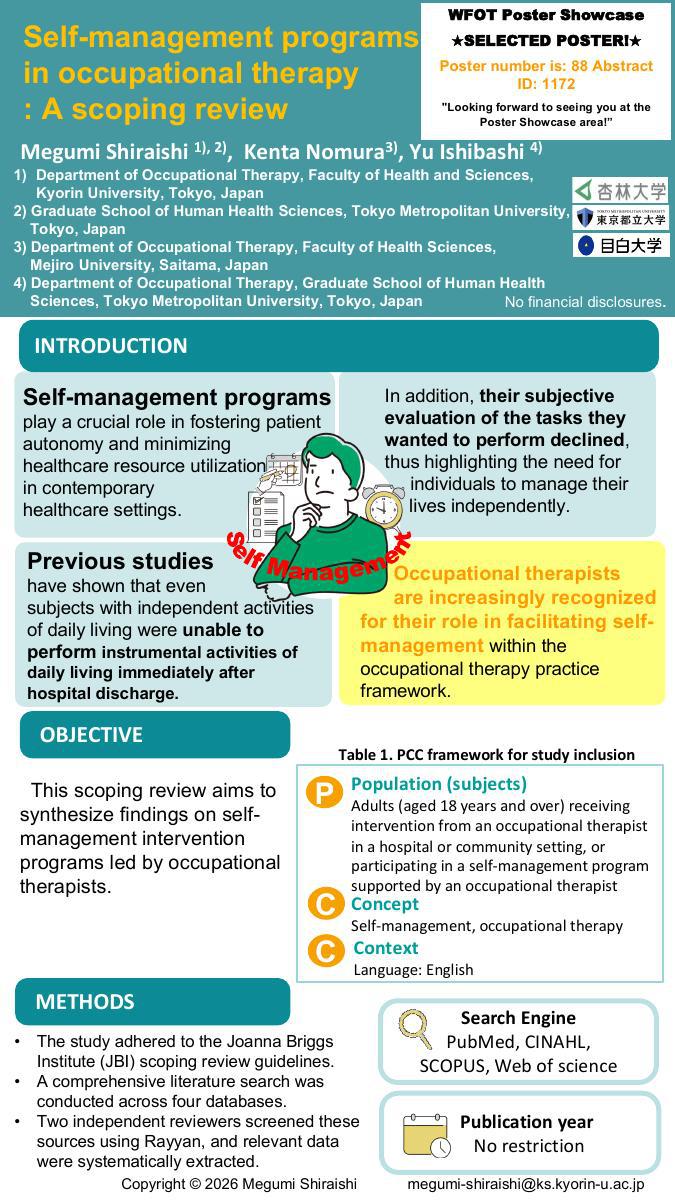
Introduction: Self-management programs play a crucial role in fostering patient autonomy and minimizing healthcare resource utilization in contemporary healthcare settings. Previous studies have shown that even subjects with independent activities of daily living were unable to perform instrumental activities of daily living immediately after hospital discharge. In addition, their subjective evaluation of the tasks they wanted to perform declined, thus highlighting the need for individuals to manage their lives independently. Occupational therapists are increasingly recognized for their role in facilitating self-management within the occupational therapy practice framework.
Objectives: This scoping review aims to synthesize findings on self-management intervention programs led by occupational therapists.
Methods: The study adhered to the Joanna Briggs Institute (JBI) scoping review guidelines. A comprehensive literature search was conducted across four databases. Two independent reviewers screened these sources using Rayyan, and relevant data were systematically extracted.
Results: The initial search yielded 1,697 sources. After screening, 33 studies met the inclusion criteria. The majority of interventions targeted chronic conditions, including neurological and stroke, with a particular focus on fatigue and pain. Only three interventions were administered during hospitalization, while the remainder were community-based. Notably, 40% of the interventions were grounded in theoretical frameworks such as self-efficacy theory.
Conclusion: Self-management programs in occupational therapy not only provided information but were also developed in collaboration with the subject and the occupational therapist. Implementing theory-based occupational therapy self-management programs within hospital settings, particularly those designed for short-term interventions, is highly recommended to enhance patient outcomes and optimize healthcare efficiency.