
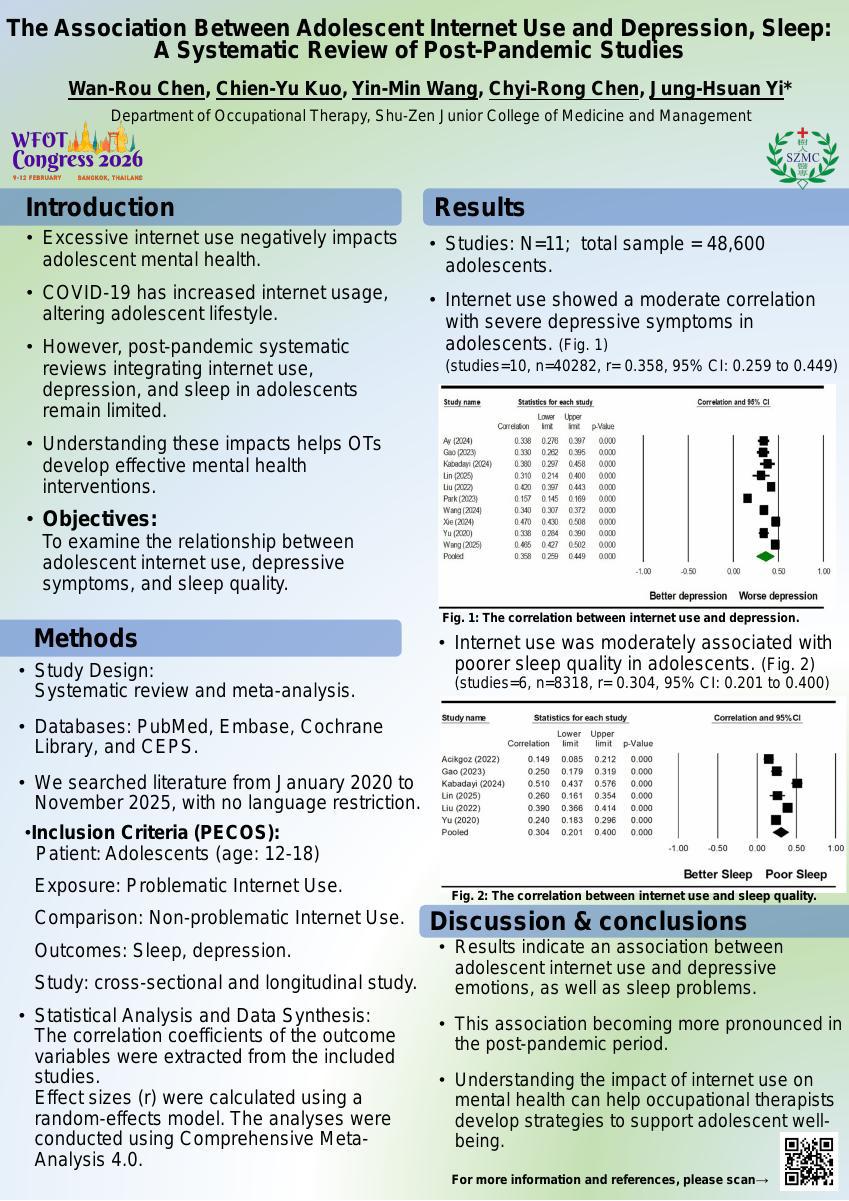
Introduction/Rationale: Studies have suggested that excessive internet use among adolescents may negatively affect mental health. During the COVID-19 pandemic, adolescent internet use became increasingly prevalent, potentially altering their lifestyles. However, a systematic examination of the relationship between post-pandemic adolescent internet use and depression or sleep patterns is still lacking in the literature.
Objective: To examine the relationship between adolescent internet use, depressive symptoms, and sleep quality.
Methods: This study employs a systematic review and meta-analysis approach. Literature searches will be conducted in PubMed, Embase, Cochrane Library, and CEPS. Eligible studies will include cross-sectional and longitudinal designs examining the association between adolescent internet use, depression, and sleep quality. Effect sizes will be calculated using Pearson's r for individual studies in the meta-analysis. The initial literature search will cover studies published from January 2020 to January 2025, with a second search to be completed in November 2025 to capture ongoing studies.
Results: To date, preliminary results indicate a significant positive correlation between problematic internet use and depression (N=9, n=38,612, r=0.345, p<0.001), as well as between problematic internet use and sleep disorders (N=7, n=8,318, r=0.304, p<0.001) in adolescents. These findings highlight generational differences and emphasize the need for proactive interventions.
Conclusion: Preliminary results indicate an association between adolescent internet use and depressive emotions, as well as sleep problems, with this association becoming more pronounced in the post-pandemic period. Understanding the impact of internet use on mental health can help occupational therapists develop strategies to support adolescent well-being.