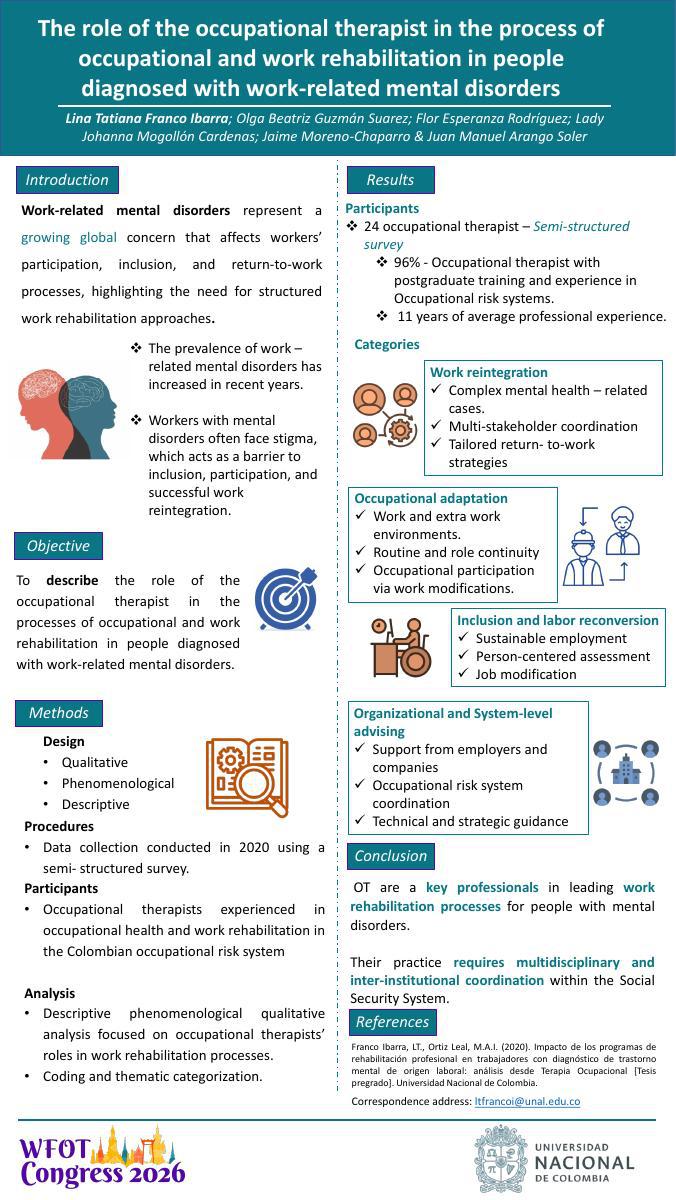
Introduction: Work-related mental disorders have increased in prevalence in recent years; high work demands, company characteristics, and organizational management are established as relevant factors for maintaining mental health. Likewise, workers with mental disorders face stigmas that hinder the processes of inclusion, reincorporation, and adaptation to the work and extra-work environment, which consolidates a barrier to participation in the different occupational dimensions. This is how the need arises to establish work rehabilitation processes, which include the participation of occupational therapists, who lead, manage, and accompany people during their process of return and readaptation to work and daily life while advising companies and social security entities.
Objective: To describe the role of the occupational therapist in the processes of occupational and work rehabilitation in people diagnosed with work-related mental disorders.
Method: Phenomenological study with a descriptive approach. 24 occupational therapists participated. Data collection was carried out in 2020 through a structured survey.
Results: Occupational therapists fundamentally intervene in the reintegration of people with mental disorders, who are considered more complex and difficult to manage among the different actors in the process. They also assist in adapting to the work and extra-work environment, promoting inclusion and reconversion of labor, and providing advice to companies and occupational risk administrators.
Conclusion: The professional competencies to lead the work and occupational rehabilitation processes in people with mental disorders at their different stages are highlighted, as well as to develop multidisciplinary and inter-institutional work, including the different actors of the Social Security System.
