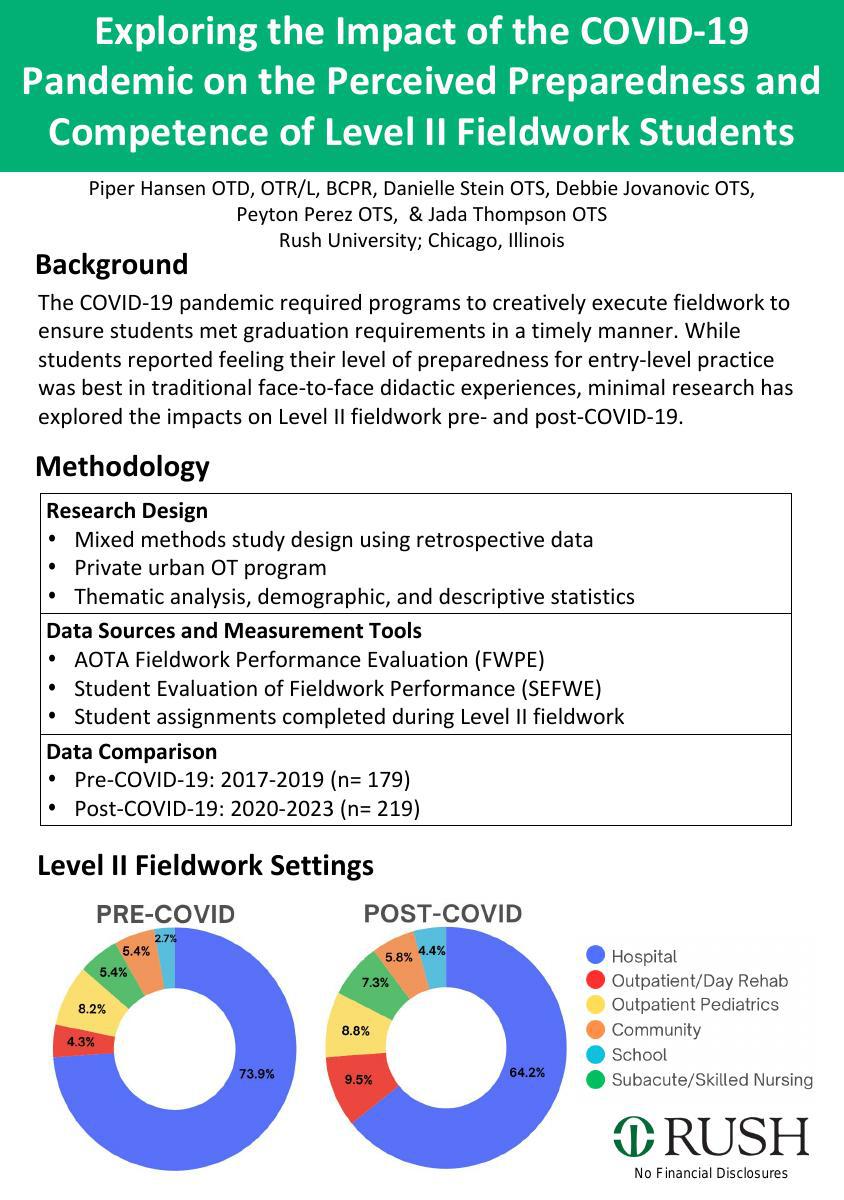
Introduction: The COVID-19 pandemic required occupational therapy programs to creatively execute fieldwork to ensure students met graduation requirements in a timely manner. While students reported feeling their level of preparedness for entry-level practice was best in traditional face-to-face experiences, minimal research has compared level II fieldwork pre and post COVID-19. Objectives: Participants will be able to: Analyze the impact of the COVID-19 pandemic on occupational therapy students’ Level II fieldwork experiences. Compare Level II fieldwork experiences and outcomes pre and post the COVID-19 pandemic. Describe how students developed rapport and addressed psychosocial aspects of practice pre and post COVID-19 pandemic.
Methods: This study used a mixed methods design using retrospective data to understand and compare students’ level II fieldwork performance, experiences, and perceived competence pre and post the onset of the COVID-19 pandemic in 2020. Deidentified, retrospective data included student assignments, such as discussion posts, progress reports, and evaluations from educators and students. Descriptive statistics and qualitative themes were used to compare experiences from 2017-2019 with 2020-2023.
Results: This study found that students who completed Level II fieldwork pre and post COVID had similar learning experiences overall despite the modifications required. The rigor and requirements of fieldwork remained consistent from 2017-2023. Students did feel the need for more support post COVID, despite minimal modifications to the level of supervision provided.
Conclusion: Emerging research suggests that the COVID-19 pandemic significantly impacted fieldwork experiences and this study provides insight into aspects of the fieldwork experiences that were more significantly impacted. This study demonstrates guidance for direct practice implication associated with onboarding practices, continuing education and new practitioner support.
