
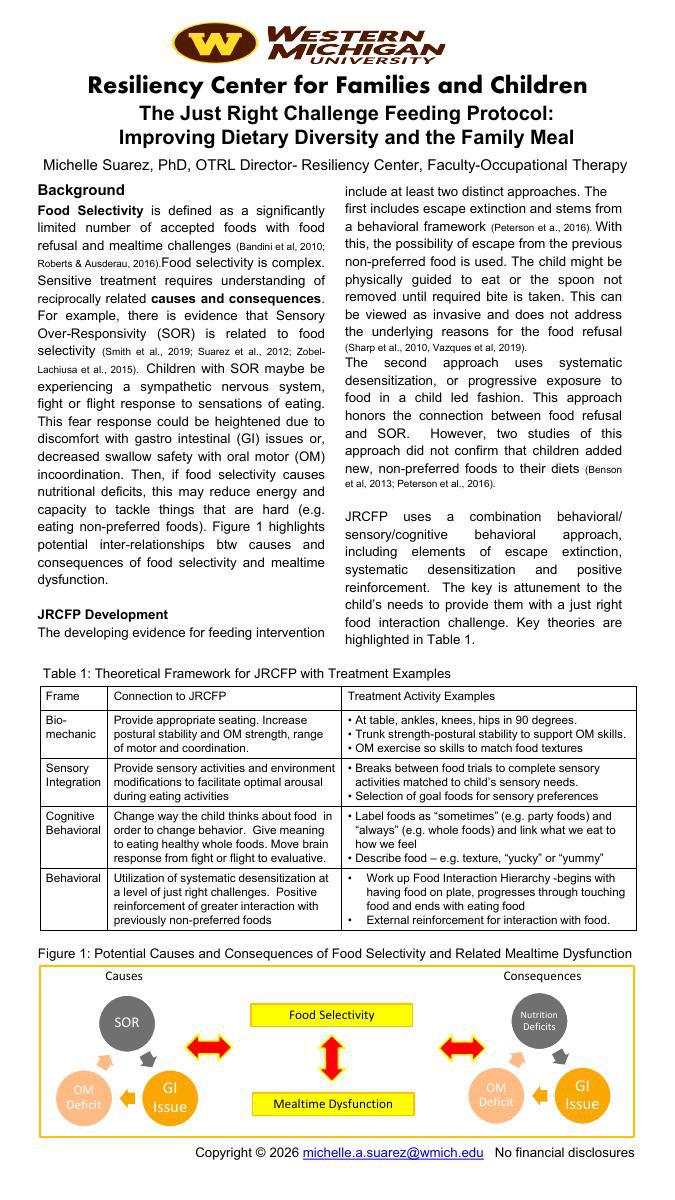
Introduction: Food selectivity has negative implications for a child’s nutritional status and family quality of life. Children who eat less than 15 foods are at risk for growth and nutritional deficiencies. The Just Right Challenge Feeding Protocol (JRCFP) uses systematic desensitization with behavioral strategies to expand dietary variety while honoring the child’s internal experience of eating. This study evaluated the impact of the JRCFP using a Single Subject design.
Objectives:
- Define food selectivity and describe the impact on children and families
- List and describe the essential elements of the JRCFP
- Evaluate the outcomes of the JRCFP with multiple baseline single subject data
Methods: Children were recruited for this multiple baseline single subject study if they accepted less than 15 foods. Baseline food inventory data was collected before intervention began. The number of foods that the child accepted during and after treatment was collected and compared to baseline. Data was analyzed using percentage of non-overlapping data and Wilcoxon Matched-Pairs Signed-Rank.
Results: The JRCFP changed the number of foods accepted from baseline for four of the six participants. Visual inspection of data highlights characteristics of children in which this protocol may be most successful. There was a statistically significant difference in foods accepted before and after treatment for the group as a whole.
Conclusion: This study indicates that the JRCFP may be effective for improving dietary variety. Occupational therapist could use this approach to relieve parent worry about their child’s diet and reduce nutritional deficiency.