
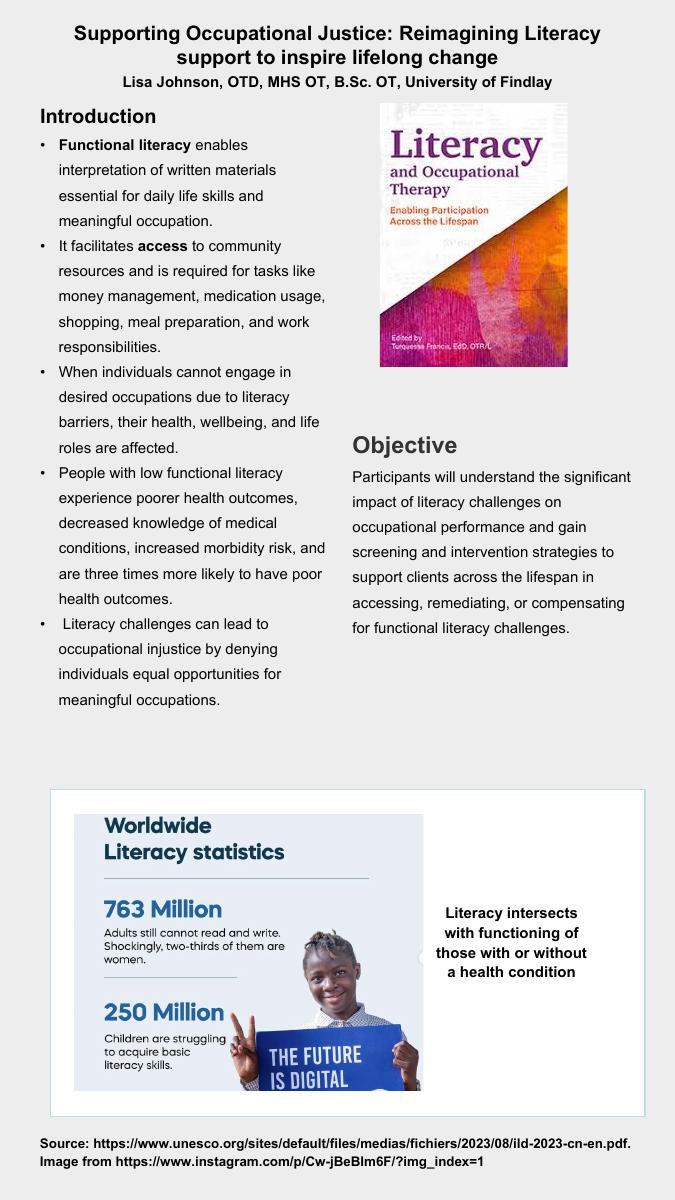
Introduction / Rationale: Functional literacy enables interpretation of written materials essential for daily life skills and meaningful occupation. It facilitates access to community resources and is required for tasks like money management, medication usage, shopping, meal preparation, and work responsibilities. Functional literacy impacts community participation such as reading warning signs or emergency directions. When individuals cannot engage in desired occupations due to literacy barriers, their health, wellbeing, and life roles are affected. People with low functional literacy experience poorer health outcomes, decreased knowledge of medical conditions, increased morbidity risk, and are three times more likely to have poor health outcomes. Literacy challenges can lead to occupational injustice by denying individuals equal opportunities for meaningful occupations.
Objectives: Participants will understand the significant impact of literacy challenges on occupational performance and gain screening and intervention strategies to support clients across the lifespan in accessing, remediating, or compensating for functional literacy challenges.
Methods / Approach: Occupational therapy practitioners (OTPs) partner with clients to promote successful participation in daily activities across all settings. By considering client literacy capacity, OTPs can remediate literacy barriers, modify tasks, recommend adapted equipment, or connect clients with literacy development specialists.
Results / Practice Implications: Recognizing how literacy challenges influence clients' role performance allows OTPs to facilitate social inclusion, health, and wellness.
Conclusion / Contribution: Low literacy is a globally recognized social determinant of health. By addressing this issue, OTPs can collaborate with other professionals, demonstrate their value, and contribute to systemic and policy changes that influence occupational justice.