
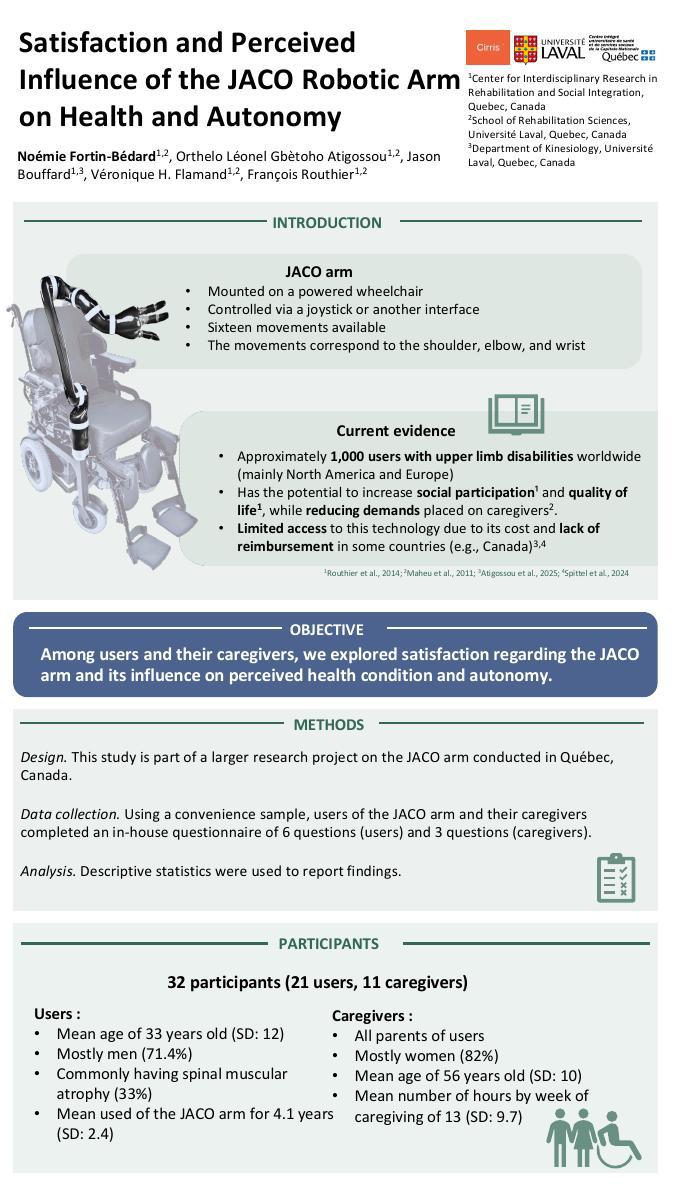
Introduction / Rationale: The JACO arm is designed to compensate for the loss of arm movement. Knowledge on users’ experiences is essential to make an informed decision regarding the acquisition and utilization of this technology.
Objectives: Among users and their caregivers, we explored satisfaction regarding the JACO arm and its influence on perceived health condition and autonomy.
Methods / Approach: Users of the JACO arm and their caregivers completed an in-house questionnaire. Descriptive statistics were used to report findings.
Results / Practice Implications: 32 participants (21 users, 11 caregivers) had a mean age of 33 years old (SD: 12), mostly men (71.4%) and commonly having spinal muscular atrophy (33%). They had used the JACO arm for 4.1 years (SD: 2.4) on average. Caregivers were parents of users (mean [SD] age: 56 [10]). Users (n=15, 71.4%) and caregivers (n=8, 72.7%) reported being extremely likely to recommend the JACO arm. Most users (n=17, 81%) indicated that their autonomy had improved since acquiring the JACO arm, but that their health condition remained unchanged (n=15, 71.4%). Caregivers (n=7, 64%) reported feeling more comfortable leaving their loved ones alone since using the JACO arm.
Conclusion / Contribution to the occupational therapy profession: Results indicate an overall positive influence of the JACO arm on the perceived autonomy of users with limited upper limb mobility, along with a high likelihood of recommendation of the technology. These findings underscore the important potential of the JACO for improving the daily lives of users and their caregivers, which can help guide to select assistive technologies.