
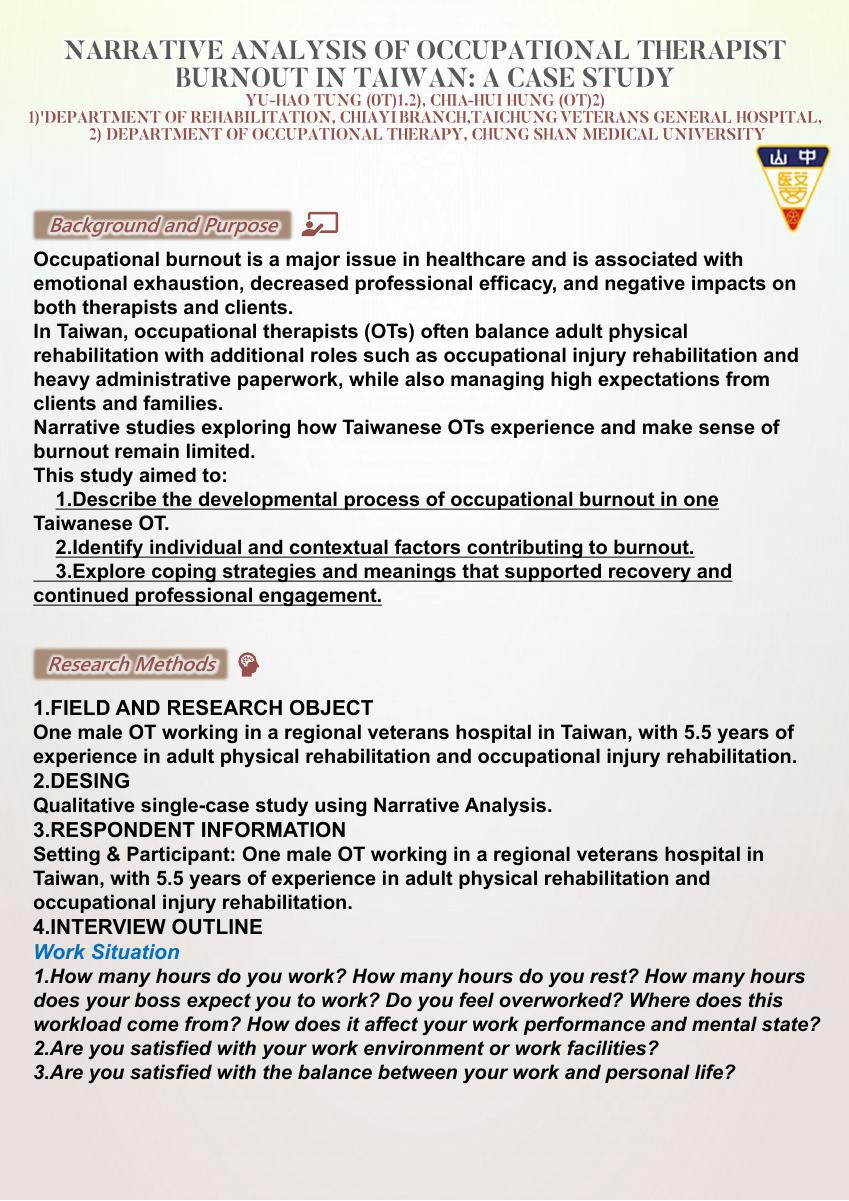
Background: Occupational burnout is a critical issue in healthcare, often leading to emotional exhaustion, reduced professional efficacy, and negative impacts on both caregivers and patients. Occupational therapists (OTs) in Taiwan face unique challenges, including balancing clinical responsibilities with administrative tasks and managing high patient and family expectations, making them particularly susceptible to burnout.
Objectives: This study aims to explore the experiences of occupational burnout within OTs, focusing on its developmental process, contributing factors, and coping strategies.
Methods: Using Narrative Analysis, this study examined the experiences of an OT at a Taiwanese medical center through an in-depth, semi-structured interview. The interview, lasting approximately 90 minutes, was recorded, transcribed, and analyzed for narrative structure, role identity, and language style. The analysis aimed to identify themes related to occupational stress, coping mechanisms, and resilience.
Findings: Occupational burnout was found to result from adapting to new responsibilities, work environment pressures, and challenges from patients and families. The participant experienced psychological, physical, and behavioral symptoms, including isolation, fatigue, headaches, insomnia, appetite changes, irritability, and social withdrawal. Proactive learning, leisure activities (e.g., travel, music), and workplace support helped alleviate burnout.
Conclusions: The study underscores the need for strong workplace support systems and effective coping strategies to reduce burnout. Future research should build on this case study by interviewing more therapists to better understand common burnout issues in the occupational therapy field.
Keywords: Occupational Burnout, Narrative Analysis, Occupational Therapists, Work Stress, Psychological Adaptation