
Introduction: Patients with schizophrenia and intellectual disabilities often experience challenges in self-expression and social engagement. Creative activities can serve as a valuable therapeutic approach, but structured support is needed to enhance their effectiveness.
Objectives: This study aims to examine the impact of stepwise support using the Vona du Toit Model of Creative Ability (VdTMoCA) on expressive content and self-efficacy in a 60-year-old male patient with schizophrenia and mild intellectual disability.
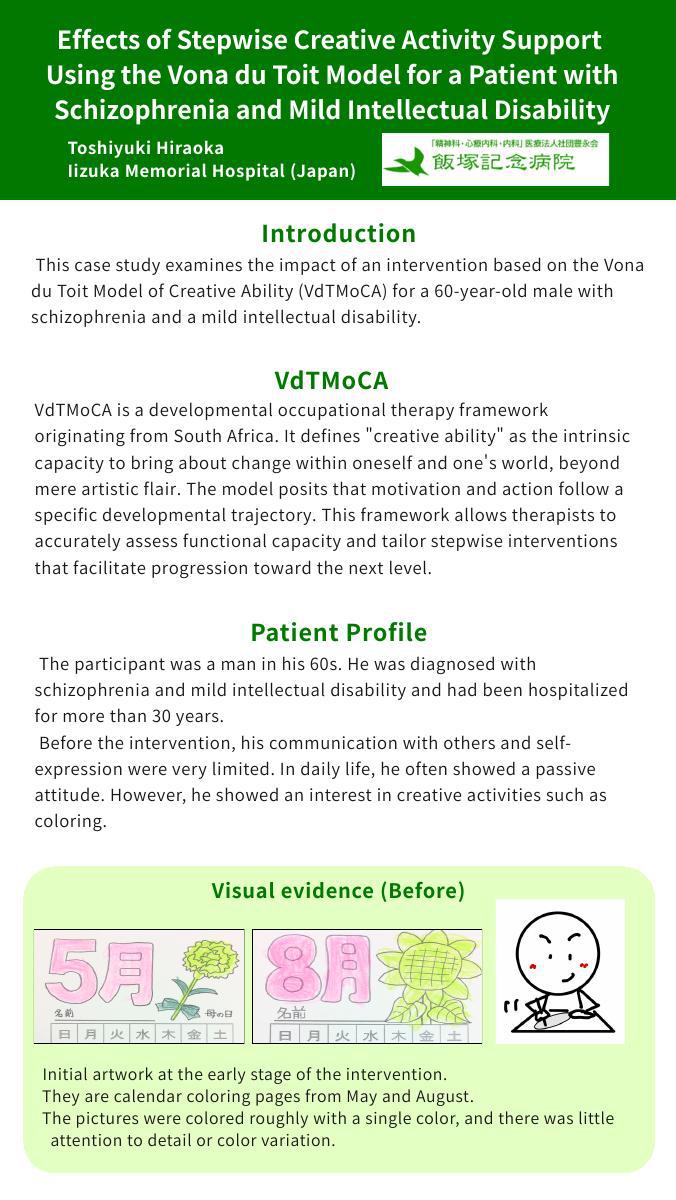
Methods: The patient had been hospitalized for over 30 years and exhibited limited self-expression, despite maintaining an interest in creative activities. Using the VdTMoCA framework, we provided interventions tailored to his creative ability level. Initially, he engaged in simple coloring and imitation-based drawing. As trust developed, he became more receptive to guidance, leading to progressive changes in his artwork.
Results: After approximately two years, the patient gained confidence in his creative activities and began completing works independently. Notably, he started presenting his artwork as gifts to ward nurses, which became a meaningful way to connect with others. His self-efficacy significantly improved, contributing to greater satisfaction with daily life.
Conclusion: This study suggests that stepwise support using VdTMoCA may facilitate expressive development and improve self-efficacy in creative activities for individuals with schizophrenia and intellectual disability. Further research is needed to explore its broader applicability.