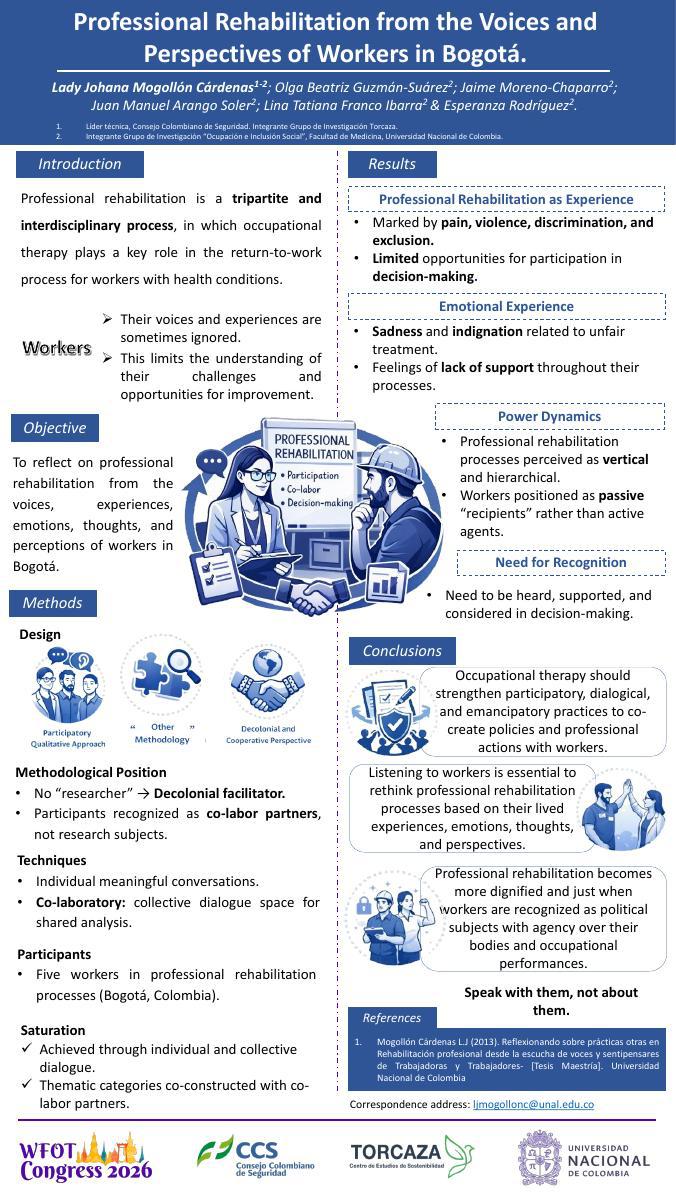
Introduction: Professional rehabilitation is a tripartite and interdisciplinary process in which occupational therapy plays a key role in the return-to-work process for workers with health conditions. However, their voices and experiences are sometimes ignored, limiting the understanding of their challenges and opportunities for improvement. Listening to them is essential to reconsider actions and procedures in this field based on their lived experiences and perspectives.
Objective: To reflect on professional rehabilitation from the voices, experiences, emotions, thoughts, and perceptions of workers in Bogotá.
Method: A participatory approach was employed, based on an “Other Methodology” as a cooperative process. Rather than being considered research subjects, participants were recognized as co-labor partners. There was no researcher but rather a decolonial facilitator. Individual meaningful conversations were conducted, in which workers shared their experiences with professional rehabilitation, along with a co-laboratory, -a collective dialogue space where the findings were analyzed together.
Results: Individual and collective conversations were held with five workers, achieving information saturation. Participants expressed sadness and indignation over unfair treatment and lack of support in their processes. They identified professional rehabilitation as an experience marked by pain, violence, discrimination, and limited opportunities for participation due to power dynamics. They highlighted the need to be heard, supported, and considered in decision-making.
Conclusions: Opportunities were identified to improve professional rehabilitation through practices that include workers' voices and promote their active participation. For occupational therapy, these findings reinforce the need for person-centered approaches and the development of more participatory policies.
