
Introduction
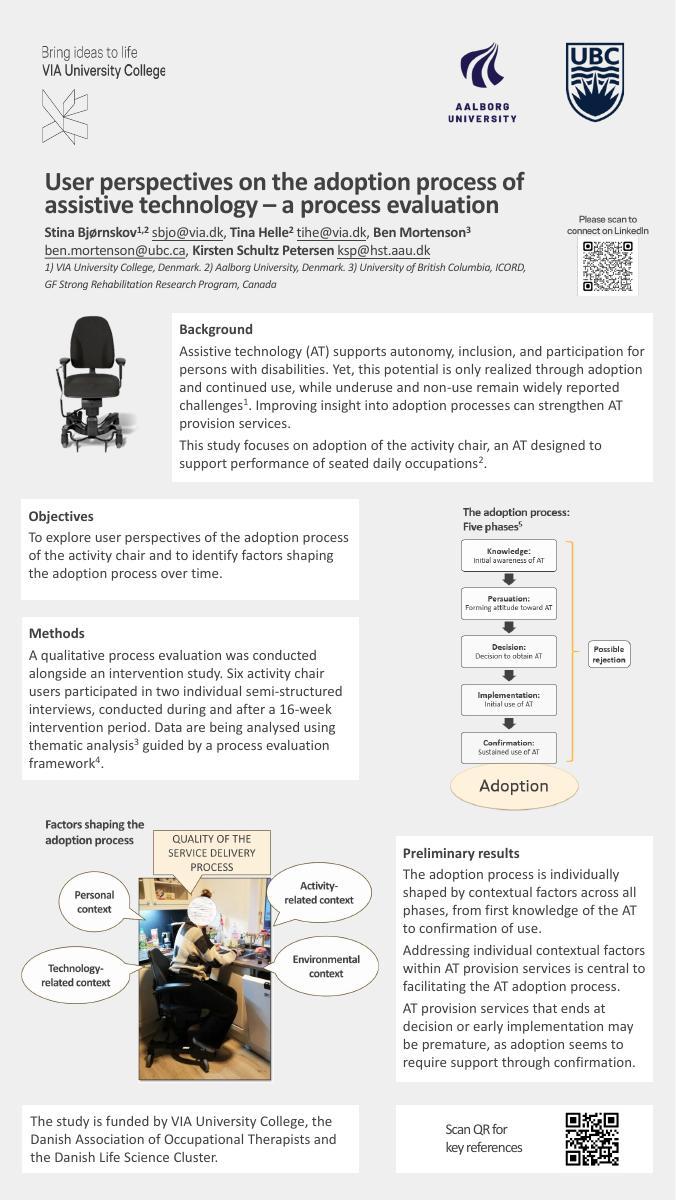
Insufficient adoption of assistive technology (AT) may limit its benefits for users or even lead to non-use — a well-documented phenomenon. The adoption process is shaped by factors such as provision service quality, personal attitudes, and contextual elements. However, this process and its influencing factors remain poorly understood. A better understanding may enhance user support, reduce non-use, and thereby promote activity and participation. This study examines the adoption process in users of the activity chair, an AT designed to support seated activities.
Objectives
To explore user perceptions of the adoption process of the activity chair, including shaping factors.
Methods
A qualitative process evaluation was conducted alongside an efficacy study using a single-case experimental design. Six participants were provided with an activity chair, activity-based training, housing adaptations, and follow-up. Two semi-structured interviews were conducted with each participant during and after the 16-week intervention. Interviews explored experiences with the adoption process, intervention impact and acceptability, and contextual factors. Data were analyzed using thematic analysis, guided by a framework for process evaluation.
Results
Data collection concludes in July 2025. The results will provide insights into how specific intervention components influence the AT adoption process, as well as how contextual factors shape and are shaped by this process.
Conclusion
The findings will inform strategies to qualify AT provision service and empower occupational therapists in supporting users. Refining the provision process may increase AT adoption, enhancing activity and participation while optimizing the use of public resources in AT delivery.