
Introduction / Rationale: Subjective cognitive decline (SCD) is considered a potential preclinical stage of Alzheimer’s disease (AD), with some individuals eventually progressing to AD. Early identification of high-risk populations is crucial for timely therapeutic and preventive interventions.
Objectives: This study used T1-weighted MRI to examine brain structural differences between cognitively normal controls (CNs) and individuals with SCD. The findings aimed to inform the development of targeted interventions designed to delay or prevent cognitive decline.
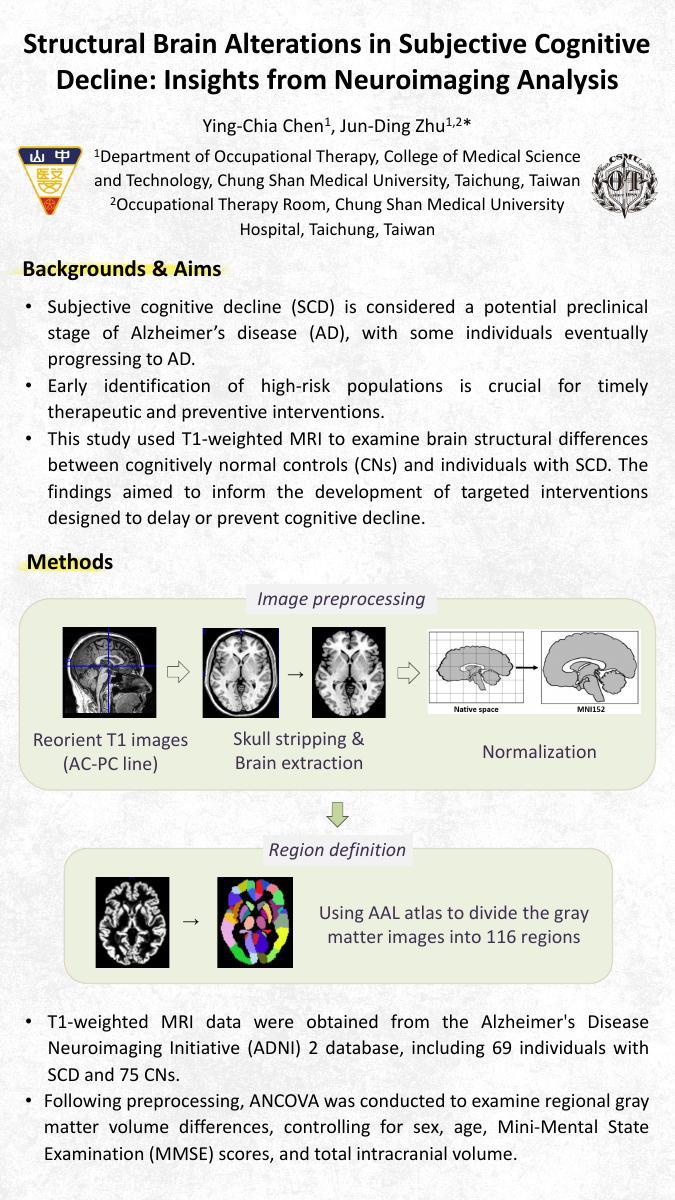
Methods / Approach: T1-weighted MRI data were obtained from the Alzheimer's Disease Neuroimaging Initiative (ADNI) 2 database, including 69 individuals with SCD and 75 CNs. Following preprocessing, ANCOVA was conducted to examine regional gray matter volume differences, controlling for sex, age, Mini-Mental State Examination scores, and total intracranial volume.
Results / Practice Implications: Compared to the CN group, the SCD group exhibited a trend toward reduced gray matter volume, particularly in the right inferior occipital gyrus, left paracentral lobule, left Heschl’s gyrus, and left middle temporal gyrus (uncorrected p < 0.05; partial eta squared = 0.03–0.04). Although these findings did not remain significant after Bonferroni correction, they suggest subtle structural alterations in the SCD group despite the absence of objective cognitive impairment.
Conclusion / Significance to Occupational Therapy: Early brain structural changes may serve as potential biomarkers for identifying individuals at risk of cognitive decline. Recognizing these changes underscored the importance of early detection, enabling occupational therapists to implement proactive strategies to preserve cognitive function and delay impairment in aging populations.