Introduction: A culture was considered comparable if its rituals, beliefs, and values were similar. Saudi Arabian occupational therapy evaluations and interventions may be impacted by a number of factors in Western, European, and Asian. Nevertheless, there wasn't much research done in Saudi Arabia.
Objectives: The study explores the impact of culture on occupational therapy practice in Riyadh, Saudi Arabia, focusing on real-world experiences and the influence of Arabic and Islamic culture.
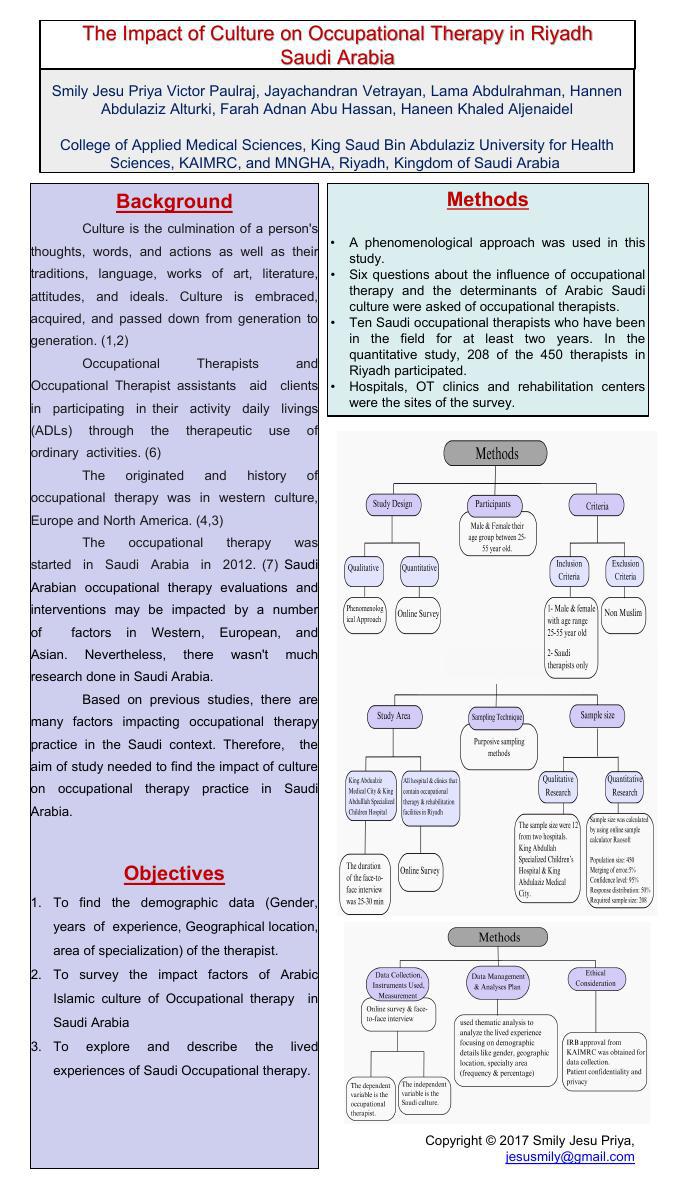
Methods: A phenomenological approach was used in this study. Six questions about the influence of occupational therapy and the determinants of Arabic Saudi culture were asked of occupational therapists. Ten Saudi occupational therapists who have been in the field for at least two years. In the quantitative study, 208 of the 450 therapists in Riyadh participated. Hospitals, OT clinics and rehabilitation centers were the sites of the survey.
Results: Phenomenological studies employ thematic analysis to manage descriptions, while data analysis began with initial interviews. The study identified demographic characteristics of partitions, including gender, geographical location, and area of specialization. The primary themes are three: learned versus practice, difference and similarities between Western and Islamic culture/ belief and factors that affect the nature of the activity.
Conclusion: To make occupational therapy's foundational ideas more culturally relevant in non-Western countries, expand and translate them. Employing and educating the same gender for OT practices can also help solve the issue of people not being prepared to embrace OT with people of the opposite gender.
