
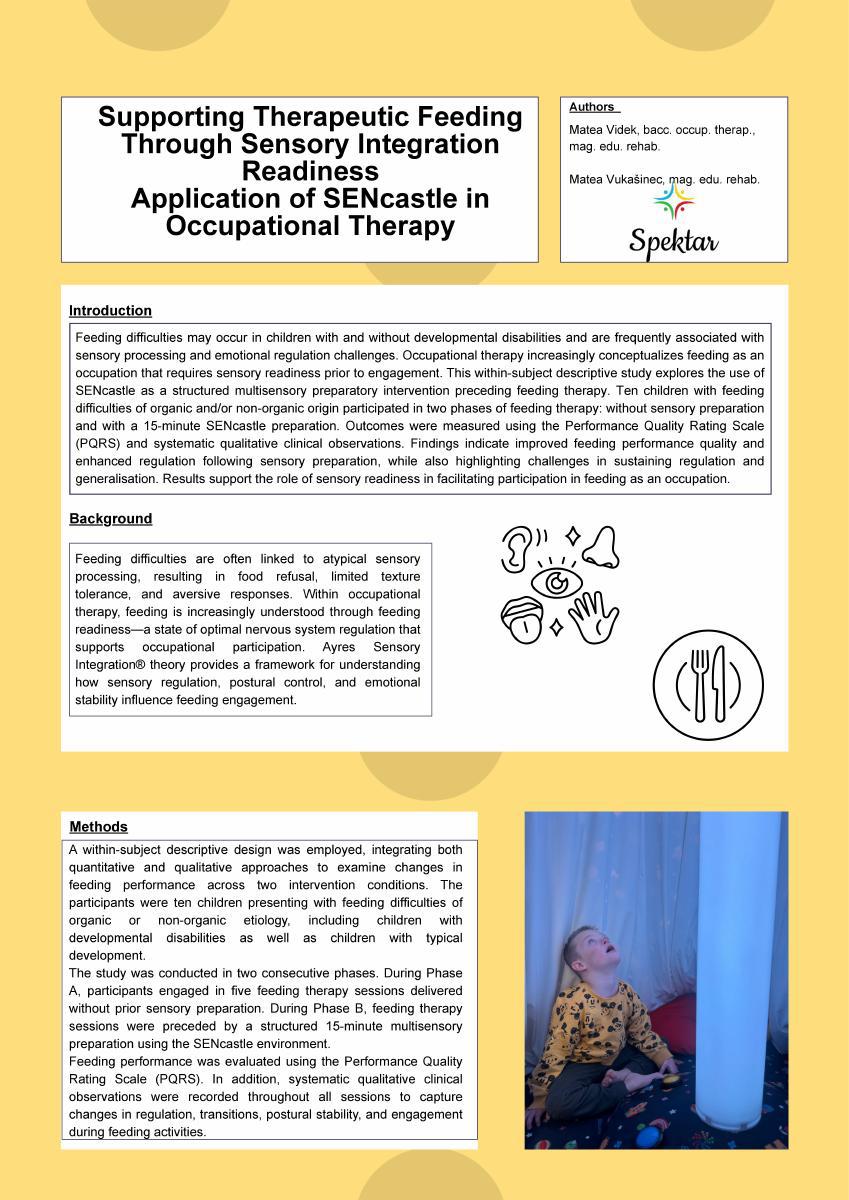
Introduction / Rationale: Feeding difficulties in children with developmental challenges are often linked to sensory processing issues, affecting their ability to tolerate and accept various food textures. The SENcastle, developed by E-Glas, is a multisensory tool designed to improve sensory processing. This study will evaluate its effectiveness as a preparatory sensory intervention to improve feeding behaviors.
Objectives:
- Assess the impact of SENcastle sessions on children’s acceptance of different food textures.
- Evaluate changes in sensory responsiveness and emotional regulation.
- Explore the feasibility of integrating SENcastle into therapeutic feeding interventions.
Methods / Approach: A within-subject pre-post study will involve 10 children with feeding difficulties. The Performance Quality Rating Scale (PQRS), a validated measure within the Canadian Occupational Performance Approach (CO-OP), will assess feeding-related performance changes. Baseline data will be collected over five feeding therapy sessions without SENcastle. In the next phase, children will experience five additional sessions where a 15-minute SENcastle session precedes therapeutic feeding. Comparisons between phases will analyze feeding behaviors and sensory regulation.
Results / Practice Implications: SENcastle sessions are anticipated to improve feeding readiness, leading to increased food acceptance, reduced aversive reactions, and better engagement. Occupational therapists may observe smoother transitions into feeding therapy, enhanced focus, and greater sensory adaptability and self-regulation.
Conclusion / Contribution to the Occupational Therapy Profession: Integrating SENcastle into feeding therapy offers an innovative, sensory-based occupational therapy approach to addressing feeding challenges. The study will provide evidence-based insights into the effectiveness of sensory integration preparation, potentially enhancing feeding outcomes and the quality of life for children and families.