
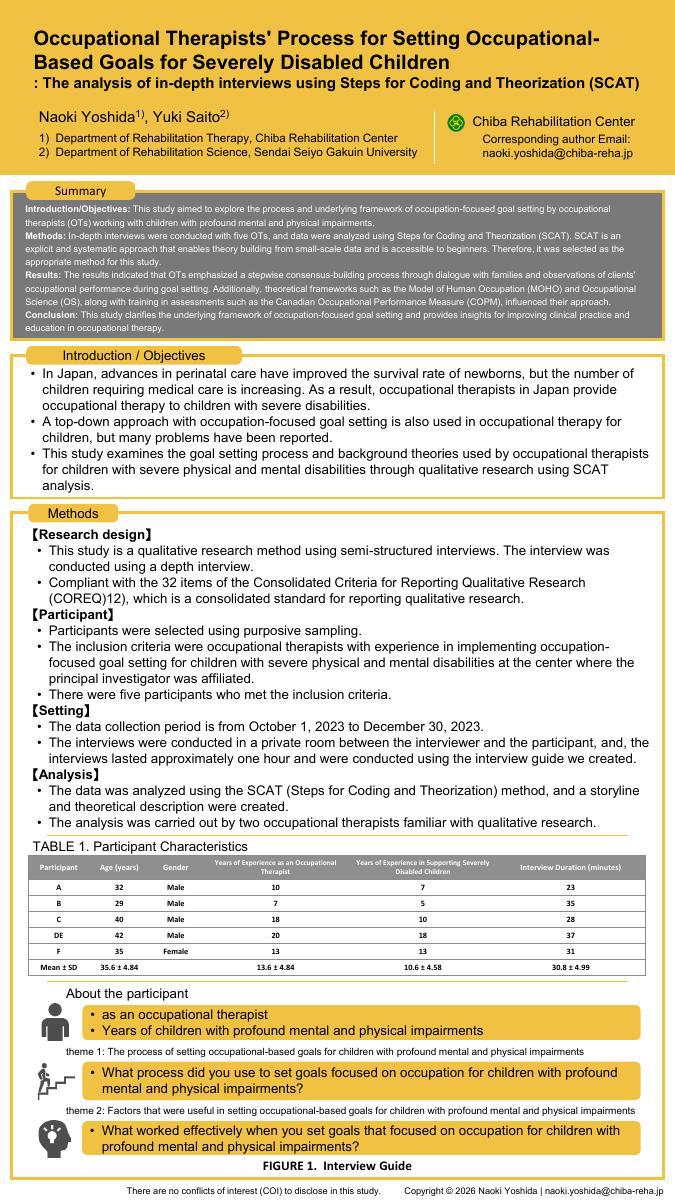
Introduction/Objectives: This study aimed to explore the process and underlying framework of occupation-focused goal setting by occupational therapists (OTs) working with children with profound mental and physical impairments.
Methods: In-depth interviews were conducted with five OTs, and data were analyzed using Steps for Coding and Theorization (SCAT). SCAT is an explicit and systematic approach that enables theory building from small-scale data and is accessible to beginners. Therefore, it was selected as the appropriate method for this study.
Results: The results indicated that OTs emphasized a stepwise consensus-building process through dialogue with families and observations of clients' occupational performance during goal setting. Additionally, theoretical frameworks such as the Model of Human Occupation (MOHO) and Occupational Science (OS), along with training in assessments such as the Canadian Occupational Performance Measure (COPM), influenced their approach.
Conclusion: This study clarifies the underlying framework of occupation-focused goal setting and provides insights for improving clinical practice and education in occupational therapy.