
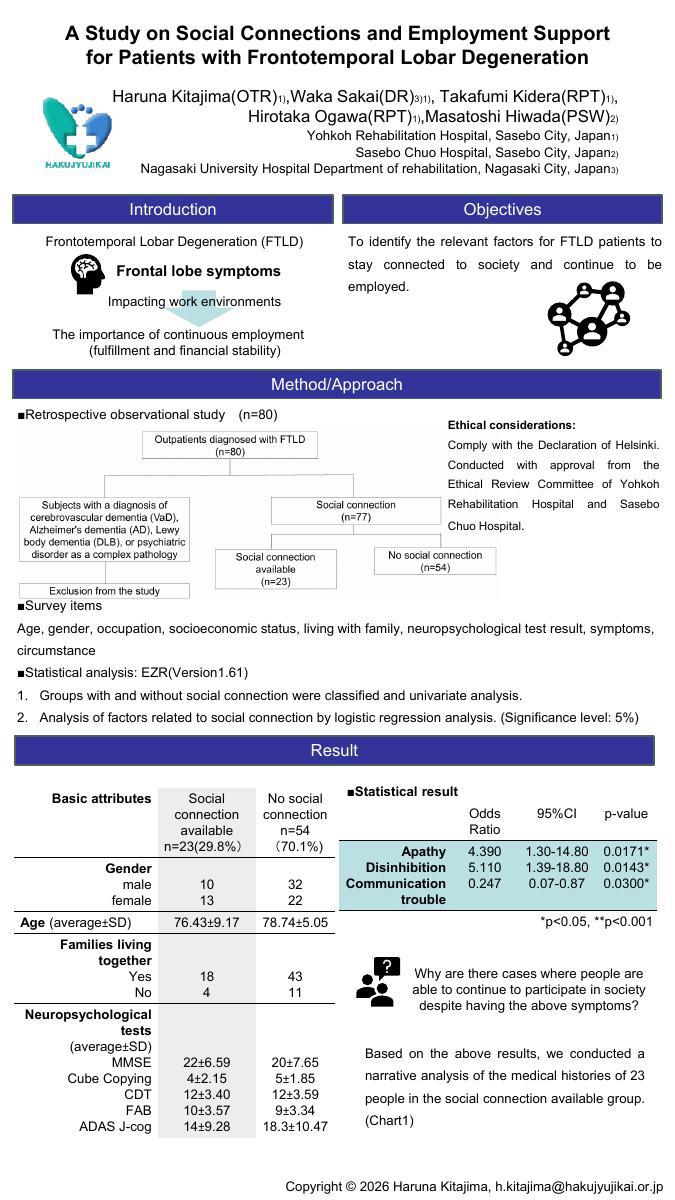
Introduction: Japan faces a growing dementia crisis, with an estimated 4.432 million diagnoses in 2024, including 40,000 cases of early-onset dementia requiring continued employment. Frontotemporal Lobar Degeneration (FTLD), affecting younger individuals, presents unique challenges due to frontal lobe symptoms, disinhibition behavior, apathy, and lack of empathy, impacting work environments. Continued employment is important for these patients to achieve a sense of fulfillment.
Objectives: To clarify the relevant factors in social participation for supporting to stay connected to the society and creating an environment for continued employment among patients with FTLD.
Method/Approach: A retrospective observational study of 80 patients who visited an outpatient clinic between March 1, 2020, and March 31, 2024, and were diagnosed with FTLD. Analyze related factors based on information from electronic medical records.
Results: After diagnosis, 31.25% of the participants were able to continue to be connected with society, which was related to the presence of family members living together, neighborhood relationships, and hobbies. 10% of them were able to continue working.
Conclusion: In FTLD, hobby activities to explore what they like and employment support based on their characteristics are useful in maintaining social connections.
It is important to identify the specificity of the patient at an early stage and to provide support and environmental settings that take advantage of symptoms and characteristics that may be considered disadvantages.