
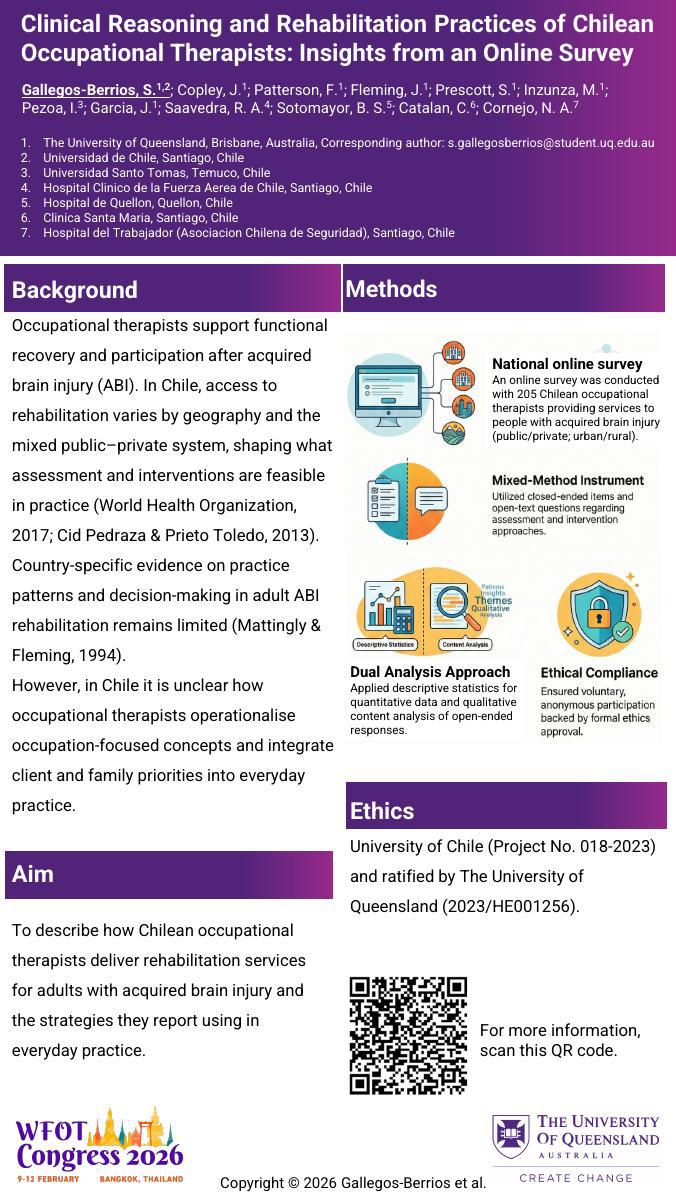
Introduction: Occupational therapists (OTs) play a key role in functional recovery and independence following acquired brain injury (ABI)—healthcare systems, geography, and funding shape access to therapy services, influencing professional decision-making. Limited culturally relevant research exists on how OTs navigate clinical reasoning and implement rehabilitation strategies in this context.
Objectives: To explore the clinical practices and decision-making processes of Chilean OTs working with people post-ABI and identify strategies to enhance evidence-based interventions in diverse healthcare settings.
Methods: A national online survey was conducted with 205 Chilean OTs working with people post-ABI across diverse practice settings. The survey included quantitative and qualitative components, exploring professional reasoning and key intervention practices. Quantitative data were analysed using descriptive statistics, while qualitative responses underwent content analysis.
Results: Findings reveal significant variability in clinical practice, influenced by geographical location, funding models, and healthcare settings. 68% of OTs lacked access to standardised assessment tools, leading many to rely on informal assessments. Rural and public-sector OTs reported more significant challenges, including limited interdisciplinary collaboration and unclear role definitions.
OTs in rural and public settings reported more significant challenges than those in urban or private sectors, including limited interdisciplinary collaboration, restricted access to rehabilitation services, and unclear role definitions.
Conclusion: This study provides insights into the practice and reasoning of Chilean OTs, particularly from qualitative interviews, highlighting the impact of structural barriers on rehabilitation. Findings underscore the need for equitable resource allocation and systemic improvements to support contextually responsive, evidence-based occupational therapy interventions. These results can inform policy development, occupational therapy education, and clinical guidelines, ensuring that rehabilitation strategies are evidence-based and adaptable to local contexts.