
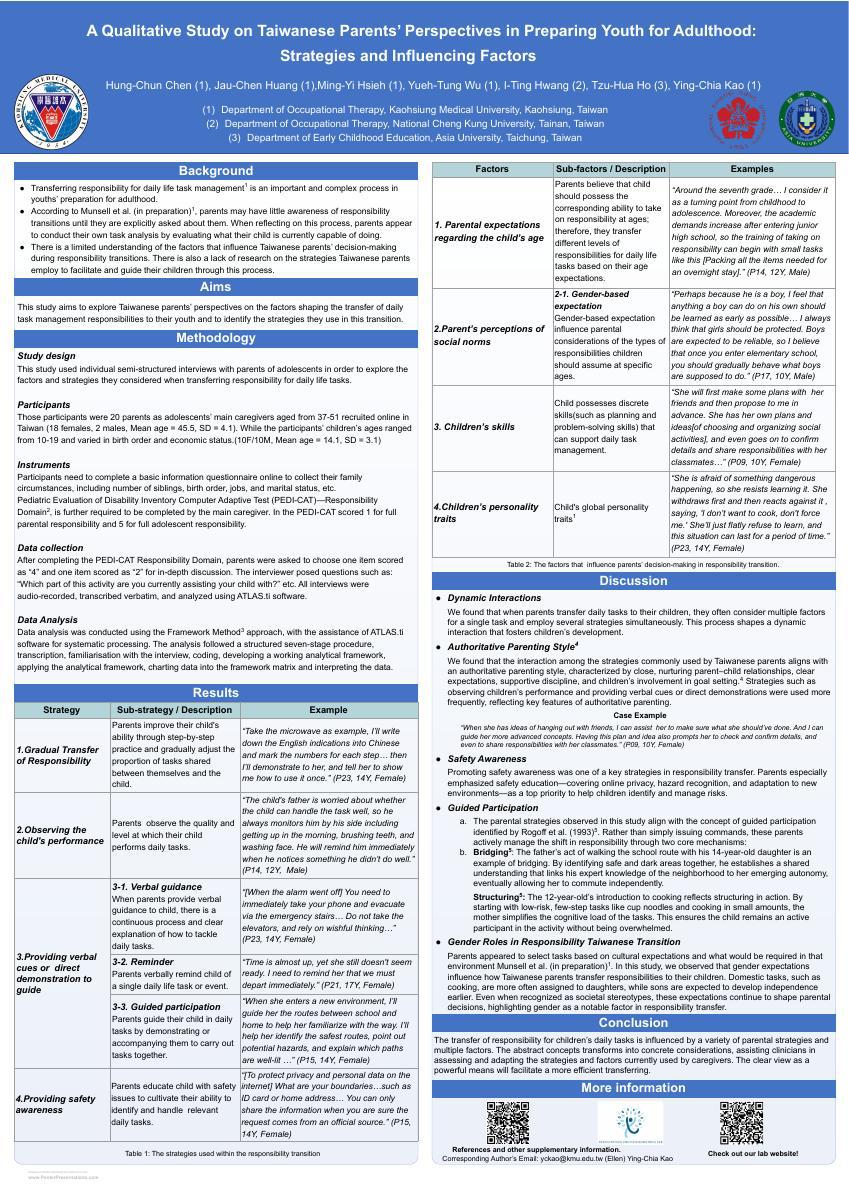
Introduction: Preparing youth for adulthood is a complex process that involves the gradual transfer of responsibility for daily task management from parents to children. However, there is limited understanding of the factors influencing Taiwanese parents' decision-making during this transition and the strategies they employ to facilitate it.
Objectives: This study aims to explore Taiwanese parents’ perspectives on the factors shaping the transfer of daily task management responsibilities to their youth and to identify the strategies they use in this transition.
Methods: This qualitative study was conducted through individual semi-structured interviews with 20 parents of typically developing youths aged 10 to 20 years in Taiwan. The interviews were recorded, transcribed, and analyzed using Framework Analysis. Data coding was conducted independently by three researchers and subsequently reviewed through group discussions with four researchers to ensure reliability and consistency.
Results: Preliminary findings suggest that three categories of factors shape parental decisions regarding responsibility transfer: child-related factors (e.g., personality traits, skill level), parent-related factors (e.g., expectations based on the child’s age, perceived risks to the child), and environmental factors (e.g., societal expectations related to gender roles). This study identified various strategies that parents employ to facilitate the transfer, including verbal guidance, demonstration, trial and error, and negative punishment
Conclusions: This study highlights the dynamic interaction among child-related, parent-related, and environmental factors in preparing youth for the transition to adulthood. It also enhances our understanding of the parental strategies used to support this process, offering insights for future research in parenting and youth development.