Introduction: Cerebral Palsy (CP) is the leading cause of physical disability in childhood (OSKUI et al, 2013). A service model based on family-centered care (FCC) recognizes that each family is unique and has resources to be strengthened, and that family caregivers are the ones who best know the child’s abilities and needs; thus, the family works together with health professionals (LAW et al, 2003). Despite being a reference for “best practices” in pediatric neurorehabilitation, there is no practical reference on how to implement FCC (McCARTHY & GUERIN, 2021).
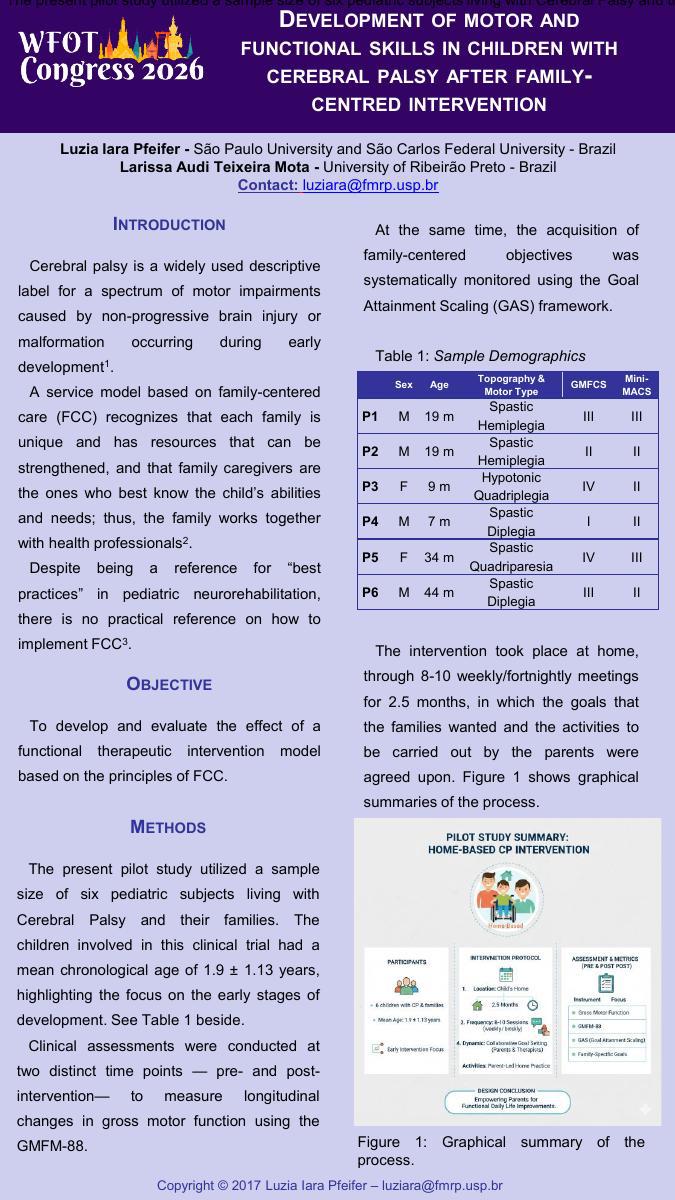
Objective: to develop and evaluate the effect of a functional therapeutic intervention model based on the principles of FCC. Methods: This is a pilot study that included six children with CP (and families) with a mean age of 1.9 ± 1.13 years. Children were assessed before and after the intervention regarding gross motor function (GMFM-88) and goal acquisition (GAS). The intervention took place at home, through 8-10 weekly/fortnightly meetings for 2.5 months, in which the goals that the families wanted and the activities to be carried out by the parents were agreed upon. Results: after the intervention, most of the children showed significant clinical improvement in the GMFM-88 and goal acquisition (GAS).
Conclusion: the Family-Centred Functional Therapeutic Intervention model proved to be viable and to have positive effects on achieving goals and on gross motor function.
