
Rationale:
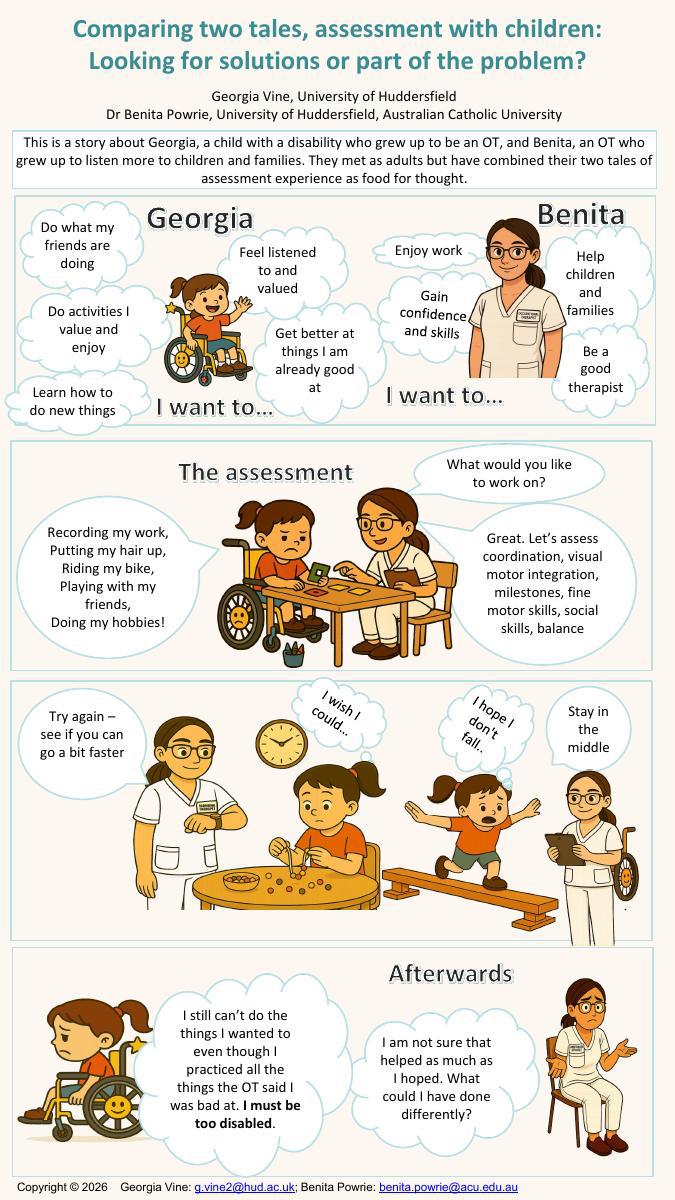
- Assessments based on development or performance-components actively position the person being assessed against the norm.
- Assessments are often standardised on ableist norms and impairment focused.
- Current evidence emphasizes the importance of person and family-centred, strengths-based, goal-orientated, occupation-focused intervention.
- Performance component, standardised assessments provide no useful information for this approach.
- Focusing on ‘deficits’ using ableist assessment tools may be causing harm.
Objectives:
- To share reflections on the value and impact of standardised assessments from the perspectives of both the assessor and the assessed.
- To encourage audience reflection on assessment practice in light of ethical and evidence-based considerations.
Approach:
- Contrasting perspectives will be explored using the lived experience reflections of a disabled occupational therapist (OT), and an OT who has 25 years of clinical experience.
- Challenging questions are posed through dialogue, encouraging listeners to reflect on their own practice and ways they may be perpetuating ableism and potentially causing harm.
- The conversation will be informed by current evidence from literature and lived experience.
Practice implications:
- Standardised assessments, often used in children occupational therapy, focus on ‘deficits’ and reinforce to disabled children that they do not fit in an ableist ‘box’ and need to be fixed.
- Assessments should only be used if they support evidence-based intervention choices that enhance occupational participation.
Contribution to the occupational therapy profession:
- OT’s working with children need to acknowledge ableist perspectives and critically analyse their approach to assessment.
- Time spent on focusing what children can’t do takes time away from focusing on what they can.