
Introduction: In context of dementia care, assistive technology encompasses various devices and systems, designed to enhance occupational performance and support self-care activities such as dressing, brushing teeth and toileting. However, as dementia progresses, cognitive and functional changes can impact its usability.
Objectives: This study evaluates the usability of assistive technology in supporting self-care activities and enhancing occupational performance in dementia care.
Methods: A literature review was conducted, focusing on the role of assistive technology in dementia care, particularly emphasizing its use in self-care. Qualitative data from occupational therapists and caregivers were analyzed to assess practical applications, benefits, and challenges.
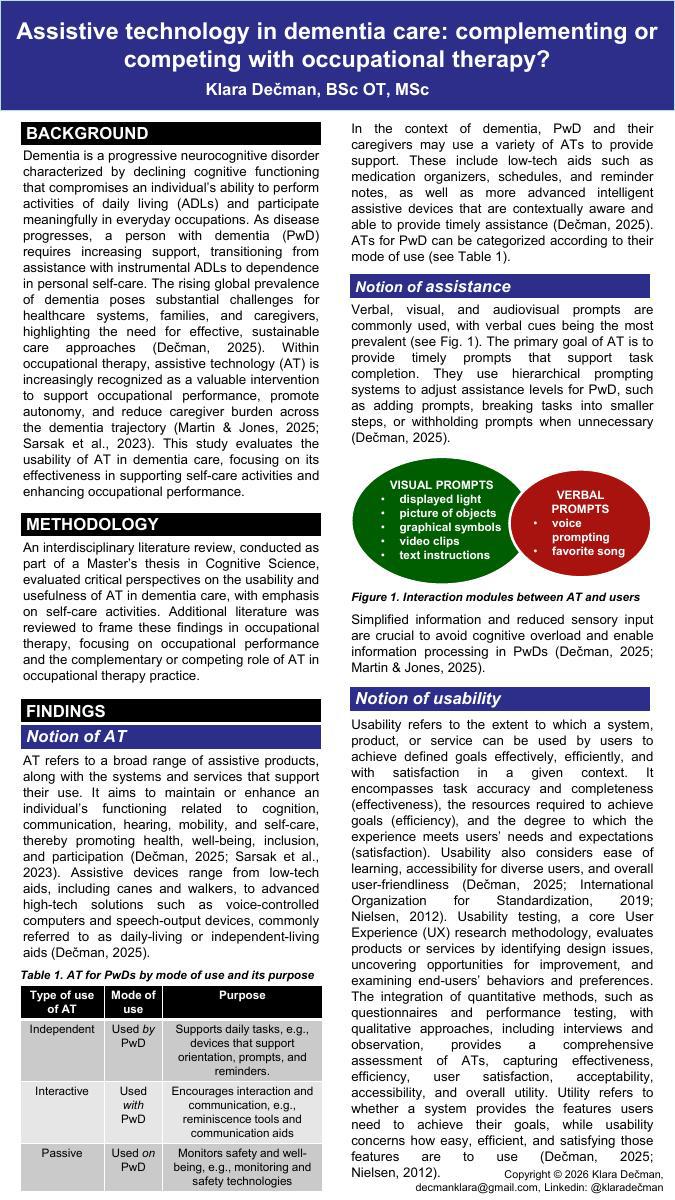
Results: Assistive technology can improve independence in early stages of dementia but becomes less effective as cognitive decline progresses. Verbal, visual, and audio-visual prompts are commonly used, with verbal cues being the most prevalent. To prevent cognitive overload, developers should simplify information and minimize excessive sensory input. Many devices lack adaptability, reducing long-term usability. Inadequate usability assessments lead to devices that fail to meet user needs, and concerns about reduced human interaction highlight the importance of a balanced approach.
Conclusion: A comprehensive evaluation framework is essential to improve adaptability and usability, ensuring assistive technology evolves with the needs of individuals with dementia. Rather than replacing human care, assistive technology should complement it, ensuring a holistic approach to enhance independence and reduce caregiver burden. Addressing these challenges is crucial for successful integration into dementia care. Occupational therapy plays a key role in selecting and adapting these technologies to support daily activities.