
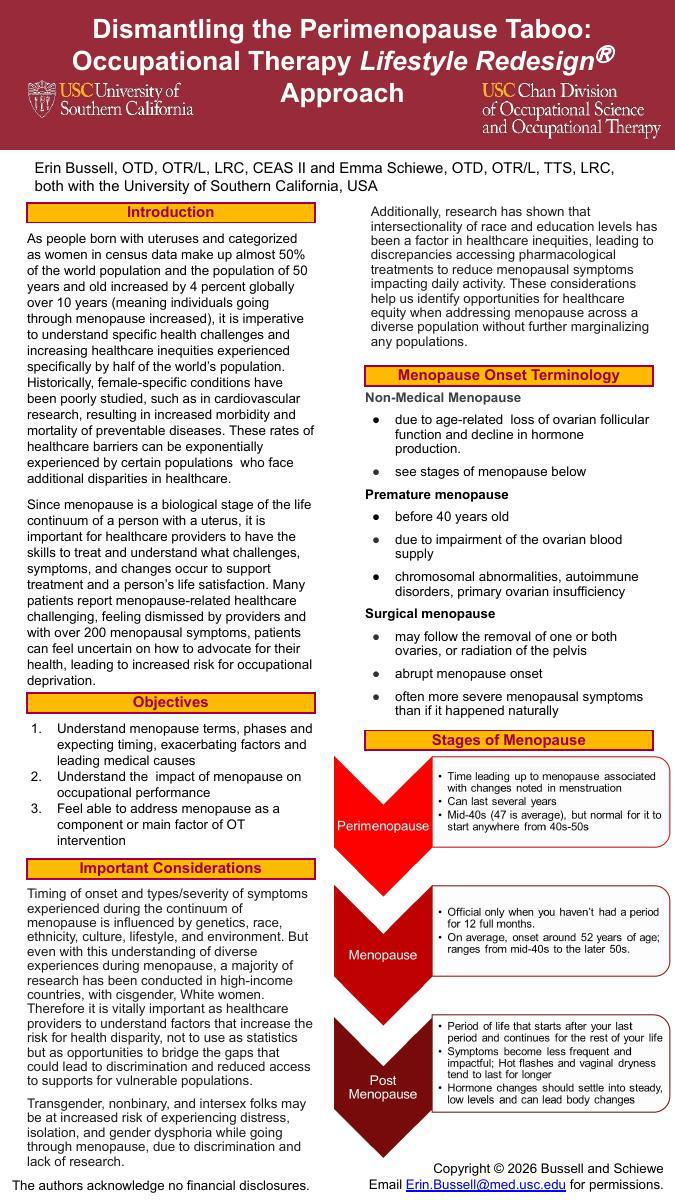
Introduction / Rationale: Awareness of healthcare inequities for women has increased, as women make up almost 50% of the world population. Historically, female-specific conditions, as in cardiovascular research, have been poorly studied, resulting in increased morbidity and mortality of preventable diseases. These rates do not account for trans individuals, who face additional disparities in healthcare. Moreover, many patients report menopause-related healthcare challenging, feeling dismissed by providers. These inequities, combined with over 200 menopausal symptoms, have left patients uncertain of how to advocate for their health. Yet, perimenopause can greatly impact participation in daily occupations, such as sexual function, health management routines, and sense of wellbeing.
Objectives: Participants will articulate menopause stages and its impacts, identify common comorbidities, and recognize the use of lifestyle-based interventions.
Methods / Approach: Instructional methods will include lecture, facilitated discussion, and case study. Utilizing a Lifestyle Redesign approach, we will examine strategies to support the perimenopause transition and healthcare advocacy.
Results / Practice Implications: Lifestyle-based intervention, including exercise and healthy eating routines, reduce blood glucose sensitivity and improve cognitive function and mental health, and reduce risk of osteoporosis and cardiovascular disease. Additionally, addressing pelvic floor function can improve individuals’ sexual and urinary health. It is imperative to support clients’ self-advocacy skills to discuss managing perimenopause with various healthcare providers.
Conclusion / Significance to the Occupational Therapy Profession: OT practitioners are positioned to engage patients in routine modifications to improve management of the perimenopause transition and associated comorbidities. Addressing symptom management reduces disparities and empowers patients to advocate for improved healthcare. By embracing integrative approaches, occupational therapists can enhance their patients’ health as they age.