
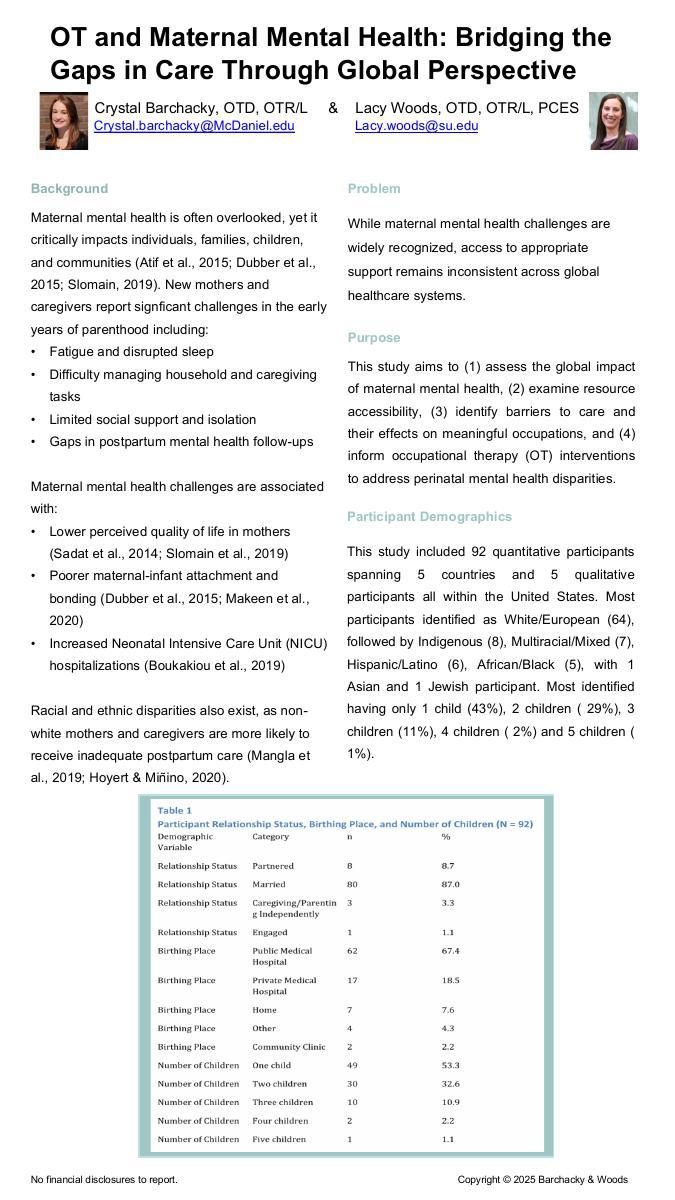
Introduction: Maternal mental health is often overlooked, impacting families and communities. Many mothers struggle to access adequate support, underscoring the need for better maternal healthcare interventions. This study explores caregivers’ and postpartum individuals’ perspectives on challenges, resources, and gaps in care across three countries to delineate a role for occupational therapy (OT).
Objective: This study aims to (1) assess the global impact of maternal mental health, (2) examine resource accessibility, (3) identify barriers to care and their effects on meaningful occupations, and (4) inform OT interventions to address perinatal mental health disparities.
Methods: A convergent parallel mixed methods approach integrates quantitative and qualitative data. Quantitative analysis includes descriptive statistics and correlations to identify gaps in early parenting. Qualitative insights come from semi-structured interviews with 10-15 purposively selected participants via Zoom or phone. Interviews are transcribed and member-checked for accuracy.
Results: Preliminary data (n=79) show 78% of mothers struggle with household tasks, 85% experience sleep disruptions, and 68% face barriers to maintaining social connections. While many undergo postpartum depression screenings, 11% receive no follow-up care. Key qualitative themes include childcare shortages, financial barriers, limited access to support groups, and male-oriented policies.
Conclusion: OT can help address maternal mental health by promoting routine-building, self-care strategies, and advocating for maternal health policies. Integrating OT into maternal care can strengthen support systems, reduce stress, and enhance mothers' overall well-being.