
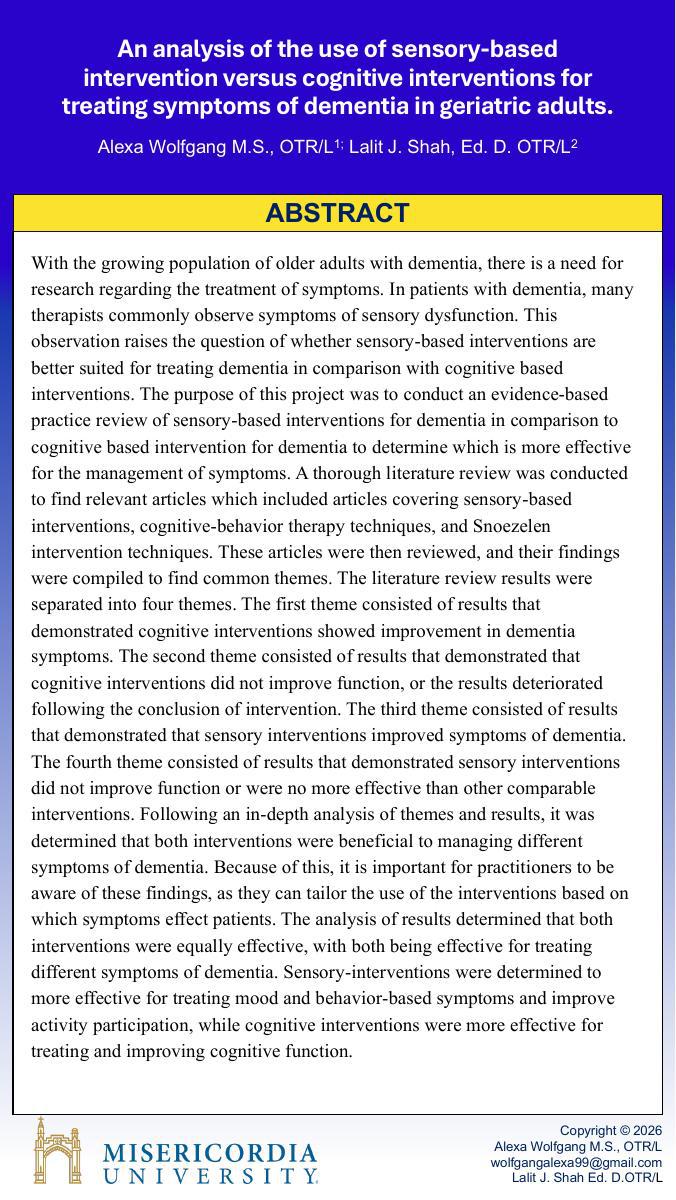
Introduction/Rationale: As the population of adults with dementia increases worldwide, there is a need for research regarding symptom management. Therapists commonly observe symptoms of sensory dysfunction in dementia patients. This observation raises the question of whether sensory-based interventions are better for treating dementia in comparison with cognitive based interventions.
Objectives: The purpose of this project was to conduct an evidence-based practice review of sensory-based interventions in comparison to cognitive based interventions to determine which was more effective for the management of dementia symptoms.
Method: A literature review was conducted to find relevant articles which included articles covering sensory-based interventions and cognitive-behavior therapy techniques. These articles were reviewed, and their findings were analyzed.
Results: The literature review (25 articles) resulted in the development of four themes. The first theme was articles that demonstrated that cognitive interventions showed improvement in dementia symptoms (10). The second theme was articles that demonstrated that cognitive interventions did not improve function, or the functions of individuals receiving interventions deteriorated (3). The third theme was articles that demonstrated that sensory interventions improved symptoms of dementia (8). The fourth theme consisted of articles that demonstrated sensory interventions did not improve function or were no more effective than other interventions (4).
Practice Implication: Analysis of results determined that both interventions were equally effective to treat different symptoms of dementia, and practitioners should be aware of this to tailor their use of interventions for patients.
Conclusion: The results determined that sensory interventions were determined to be more effective for treating mood and behavior-based and cognitive interventions were more effective for treating cognitive dysfunction.