
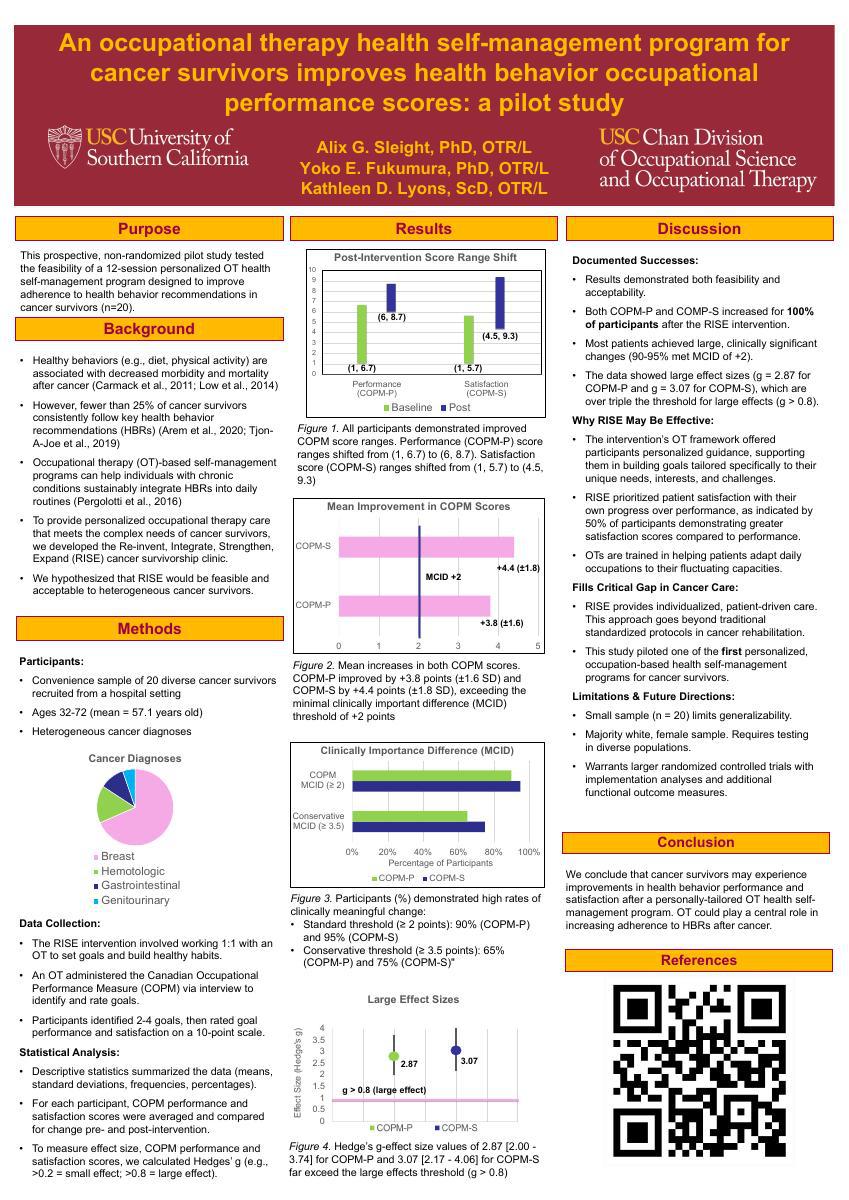
Introduction: Healthy behaviors (e.g., diet, physical activity) are associated with decreased morbidity and mortality after cancer. However, fewer than 25% of cancer survivors consistently follow key health behavior recommendations (HBRs). Occupational therapy (OT)-based self-management programs can help individuals with chronic conditions sustainably integrate HBRs into daily routines. However, to date, no study has tested the impact of OT-based self-management training on health behaviors in cancer survivors.
Objectives: This prospective, non-randomized pilot study tested the efficacy of a 12-session personalized OT health self-management program on adherence to HBRs in a convenience sample of 20 heterogeneous cancer survivors from a Los Angeles cancer center.
Methods: Eligibility required a history of non-metastatic cancer and low baseline adherence to HBRs. Patients completed the Canadian Occupational Performance Measure (COPM) at baseline and post-intervention to measure change in occupational performance (COPM-P) and satisfaction (COPM-S) related to health behavior problem areas. The intervention involved working one-on-one with an OT to set goals and develop strategies for habit change. A difference of 2 points in either COPM area was considered clinically significant.
Results: Eighteen out of 20 participants (86%) demonstrated a clinically significant change in COPM-P scores, and nineteen participants (95%) demonstrated a clinically significant change in COPM-S scores at the end of the 12-week intervention. The median COPM-P score change was +3.8 (range: +0.7 to +6.3 points) and the median COPM-S score change was +4.0 (range: +1.34 to +7.0 points).
Conclusion: We conclude that cancer survivors may experience improvements in health behavior performance after a personally-tailored OT health self-management program. OT could play a central role in increasing adherence to HBRs after cancer.