
Introduction: Sensory Processing Disorder (SPD) affects children’s ability to respond sensory stimuli, impacting their participation in school activities. Stability ball chairs explored as sensory-based intervention to support children with SPD during tabletop learning activities in Occupational Therapy (OT) practice. However, evidence on their effectiveness remains inconclusive.
Objectives: This study aims to examine the influences of sitting on a stability ball during tabletop learning activities for children with SPD. The findings will contribute to school-based OT strategies for environmental adjustments.
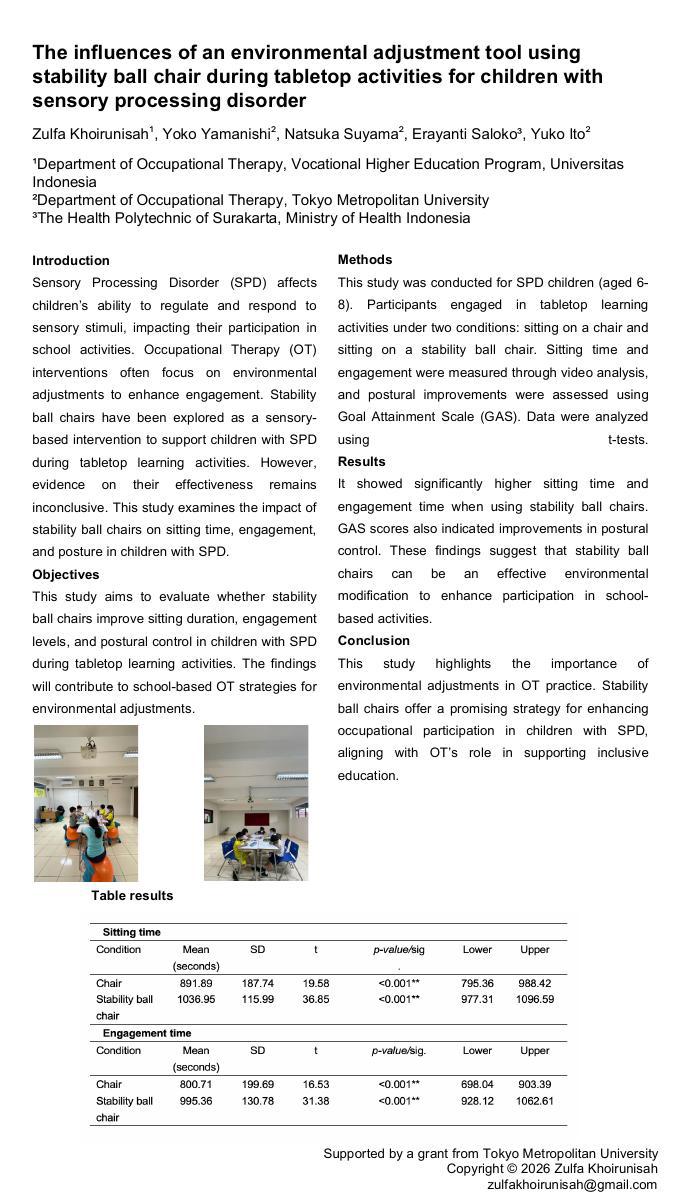
Methods: This study was conducted for children with SPD (aged 6-8). Participants engaged in 45 minutes tabletop activities 3 times a week under two conditions: sitting on a chair and sitting on a stability ball chair. Data were measured through video analysis, and postural improvements were assessed using Goal Attainment Scale (GAS). Sitting and engagement time were analyzed using t-tests.
Results: 17 participants were included in this study. The ethics approval was obtained from Research Ethics Committee Tokyo Metropolitan University and UMIN Clinical Trials. Results showed significantly higher sitting time and engagement time when using stability ball chairs. GAS scores also indicated improvements in postural control. These findings suggest that stability ball chairs can be an effective environmental modification to enhance participation in school-based activities.
Conclusion: This study highlights the importance of environmental adjustments in OT practice. Stability ball chairs offer a promising strategy for enhancing occupational participation in children with SPD. However, the number of participants were comparatively low. Further research is needed to strengthen the reliability of the study.