
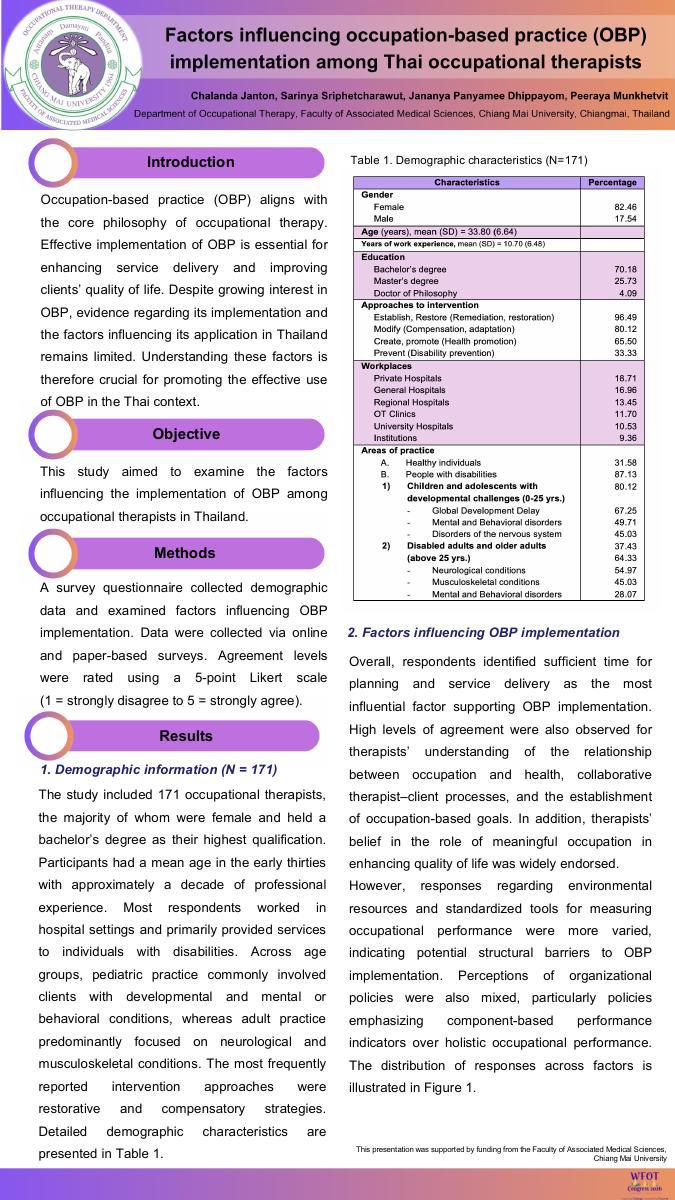
Introduction: OBP aligns with the core philosophy of occupational therapy. Effective OBP implementation is essential for enhancing service delivery and improving clients’ quality of life. Despite growing interest in OBP, evidence regarding its implementation and the factors influencing its application in Thailand remains limited. Understanding these factors is crucial for promoting the effective use of OBP in Thailand.
Objective: This study aimed to investigate the factors influencing OBP implementation among Thai occupational therapists.
Methods: A survey questionnaire was developed to collect demographic data and explore factors influencing OBP implementation. The survey was administered both online and in paper format. A 5-point Likert scale was used to measure respondents’ agreement with statements related to resource availability, organizational policies, occupational therapists’ knowledge of occupation, collaboration between therapists and clients/caregivers, and the use of OBP assessments.
Results: Out of 171 respondents, the findings indicated strong agreement on several key factors, including adequate time for service delivery, understanding the impact of occupation on health, collaborative practices between therapists and clients, setting occupation-based goals, and the positive effects of meaningful occupations on quality of life. However, uncertainty persisted regarding the impact of insufficient space, the lack of occupation-based assessments, and unsupported organizational policies.
Conclusion: This study identified factors influencing the implementation of OBP, highlighting resource constraints and ambiguous organizational policies as areas needing further exploration. These findings also emphasize the importance of exploring strategies to overcome these issues, which could inform future research and shape educational curricula to enhance OBP in Thailand.