
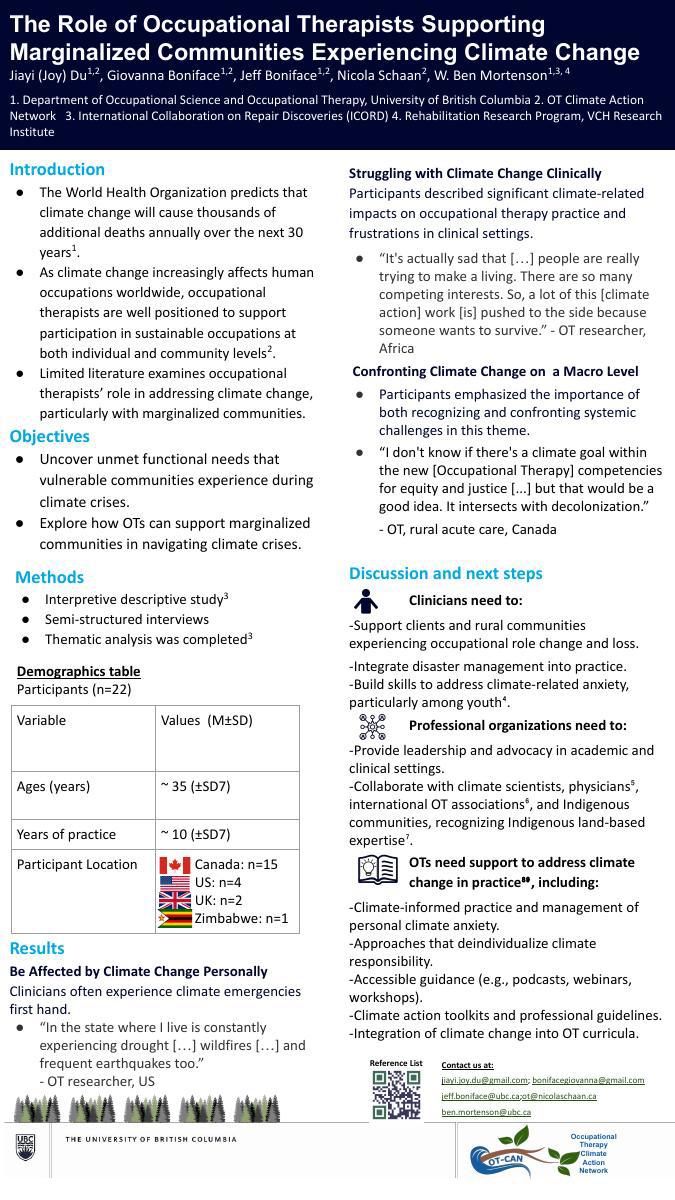
Introduction: In 2023, the World Health Organization reported that people in low-income and disadvantaged communities were most severely being affected by climate change. Emerging research has begun to explore the role of occupational therapists (OTs) in addressing climate change. However, there is limited research on how OTs can support marginalized communities experiencing climate change.
Objectives: This project aimed to 1) uncover unmet functional needs that vulnerable communities experience during climate crises; 2) explore how OTs can support marginalized communities in navigating climate crises.
Methods: This presentation synthesizes the findings from two previous complementary qualitative studies that collected data related to this topic. A total of 22 interviews were conducted across these two studies, including Canadian OTs and climate experts from the United Kingdom, Canada, and the United States.
Results: The findings emphasize the complex systems within which OTs practice and highlight the unmet functional needs that marginalized communities experience during the climate crisis. This study expands on previous findings by identifying actions that OTs can take at individual, clinical, and professional levels to support marginalized communities during climate change. Such actions include facilitating climate-resilient occupational opportunities, promoting stable housing for post-migration populations, and advocating for both equitable clinical services and systemic changes.
Conclusion: OTs have the capacity to support marginalized communities struggling with the effects of climate change. Therefore it is essential to support OTs working with these communities.