
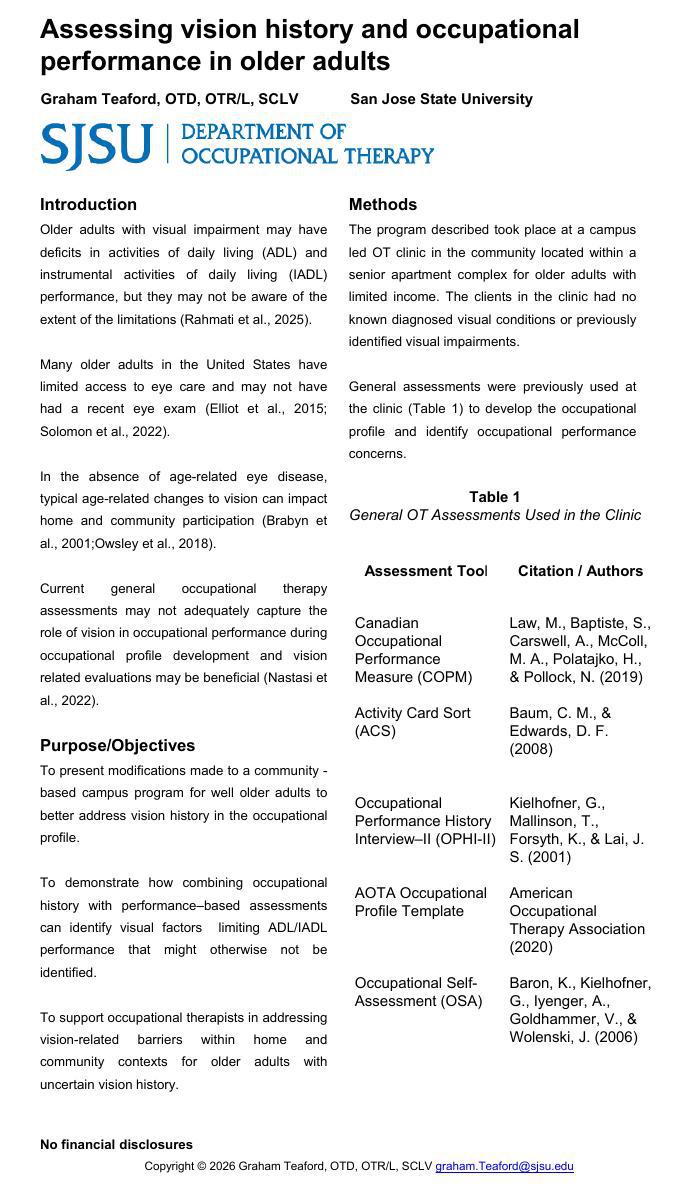
Introduction: Older adults may not recognize how visual changes impact their daily tasks (ADL/IADL). Many haven't had recent eye exams and may be unaware of age-related eye conditions. Even typical visual aging can affect home and community activities. Current occupational therapy assessments may not fully address vision's role in occupational performance when creating an occupational profile for older adults within their homes and communities.
Objectives: This presentation presents a program used in a community-based older adult setting. The program uses a combination of occupational history and performance-based assessments to identify and address visual impairments that limit ADL/IADL performance as part of a comprehensive occupational profile.
Methods: Visual history assessments, including the Revised Self-Report Assessment of Functional Visual Performance (R-SRAFVP), were used with older adults (65 years and older) who had typical age-related vision changes or no diagnosed visual impairments. The R-SRAFVP was originally developed for clients with known visual impairments.
Results: This program offers assessment and intervention methods to better serve older adults who may not identify or describe visual limitations' impact on their ADL/IADL performance using standard occupational profile methods.
Conclusion: Identifying and addressing visual impairment in older adults enhances their quality of life, reduces disability and occupational deprivation, supports engagement in valued activities, and enables aging in the community.