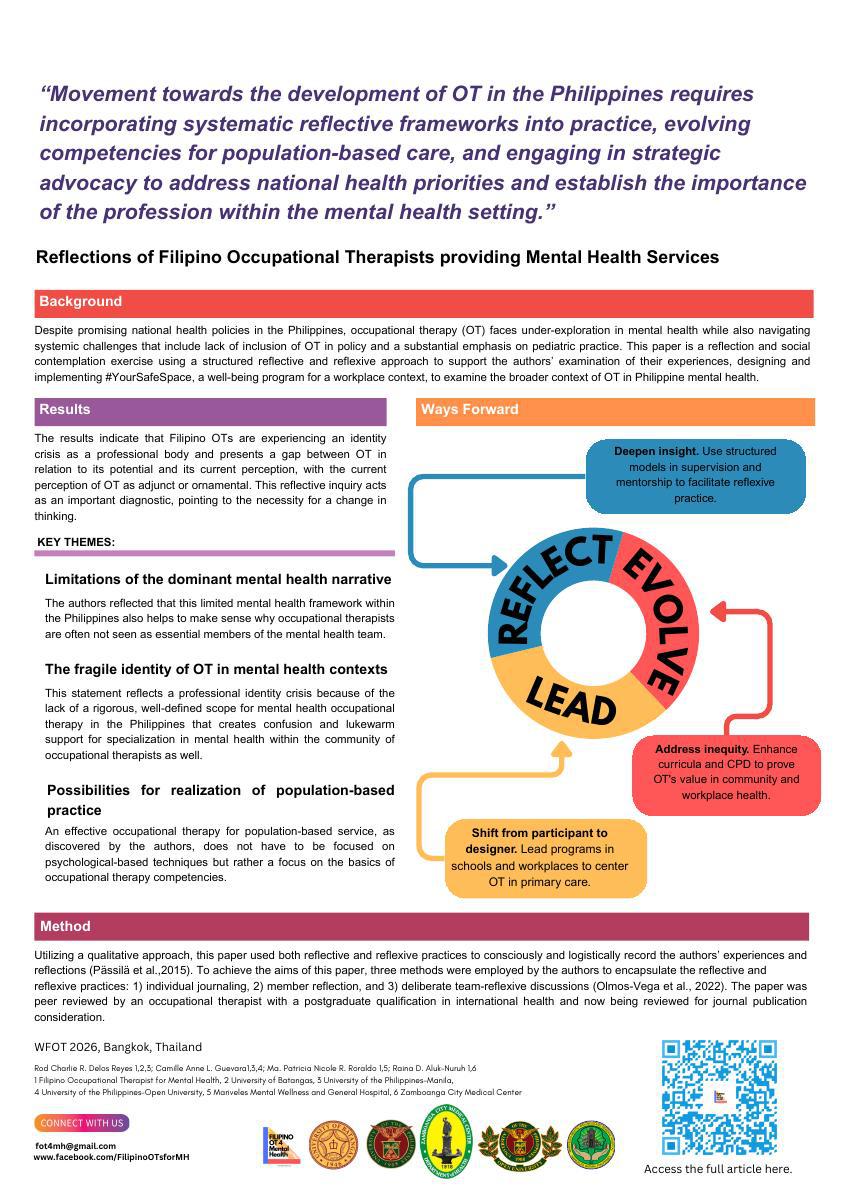
Introduction. Examining occupational therapy through promotive, preventive and intervention perspectives using a public health approach while considering the determinants and policies that influence engagement in meaningful activities provides a comprehensive foundation into understanding of the practice. It is through these approaches alongside the movement towards supporting mental health for healthcare providers both internationally and nationally that the authors reflect on the occupational therapy practice within the Philippine setting.
Objectives. This aims to explore the author's reflection on a novel program, #YourSafeSpace, provided by the authors through a volunteer organization. Specifically, the authors formed the Filipino Occupational Therapists for Mental Health (FOT4MH) during the COVID-19 pandemic to address the rising mental health concerns.
Methods.The authors reflected on their experiences using three main methods: (1) journal writing, (2) member reflections, and (3) structured team-reflexive discussions. To analyze the data gathered from various reflective and reflexive practices, concepts from Gibbs’ Reflective Cycle and the AMEE model were applied to narrate and articulate the reflections and the insights derived from them.
Results.The reflective process underscored the interconnectedness of concepts within occupational therapy, calling for inclusive practices that extend beyond symptom management. This inquiry challenges existing biases and promotes transformative practices in occupational therapy, mental health, and population health, emphasizing the need for ongoing dialogue and advocacy to enhance the role of OTs in comprehensive mental health care.
Conclusion. This paper reflects on the experiences encountered while implementing the #YourSafeSpace program, highlighting the significant potential of occupational therapy in mental health within the Philippine context.
