
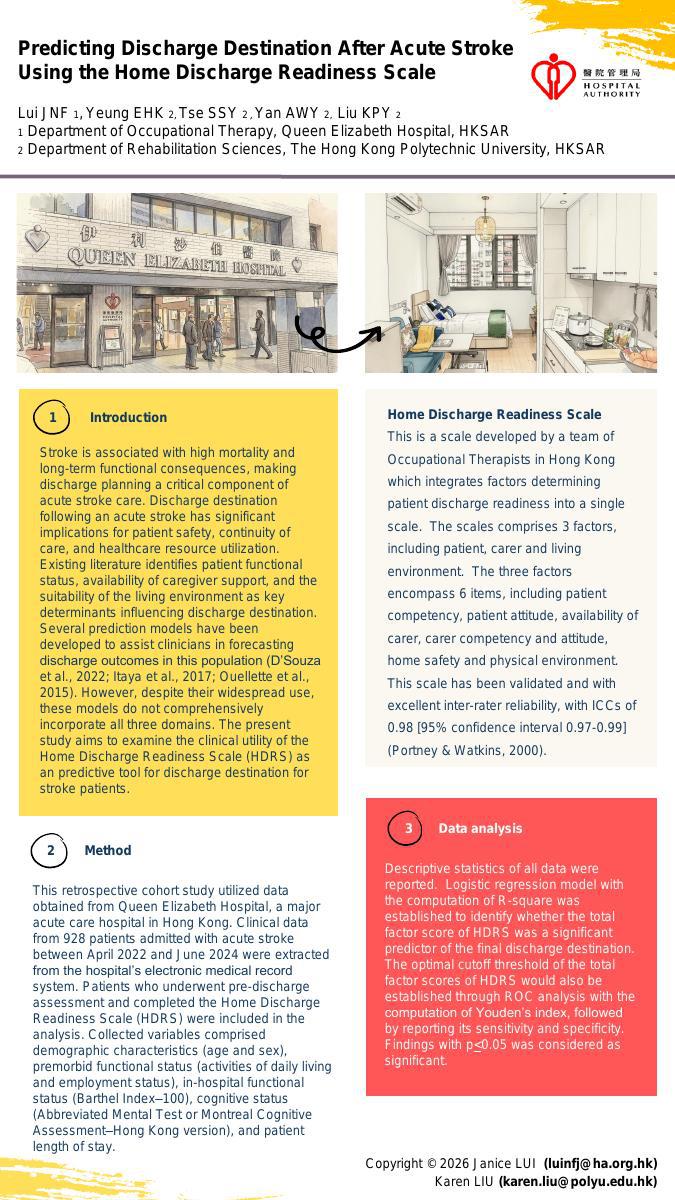
Introduction / Rationale: With literature support, patient, carer and living enviornment related factors are important to predict discharge destinations. In our setting, occupational therapist use the Home Discharge Readiness Scale (HDRS) which has put these 3 factors into consideration to triage patient's discharge destination in order to formulate the discharge plan that fits patient needs. This study investigated the application of this tool in predicting the discharge destination for acute stroke patients.
Objectives: To investigate the predictors of discharge destination for patients with acute stroke and explore the use of Home Discharge Readiness Scale (HDRS) in recommending discharge destination
Methods / Approach: This was a retrospective cohort study using the data retrieved from Queen Elizabeth Hospital, a major acute hospital in Hong Kong. Demographic data collected included HDRS, age, sex, premorbid ADL and work status, availability of carer and accessibility of living environment, Barthel Index and Abbreviated Mental Test on admission, length of hospital stay and discharge destination. For HDRS, the scores of patient, carer and living environment factors and the total factor score were captured to assess which factor is essential for predicting discharge destination and also the cut off score in predicting acute stroke patient to be discharged home.
Results / Practice Implications: Premorbid ADL and work status, Bathel Index on admission and length of hospital stay were significant predictors of discharge destination. A score of 10.5 is an optimal cutoff to be discharge home with sensitivity and specificity 88.4% and 80.8%.
Conclusion / Contribution to the occupational therapy profession: HDRS is an effective tool to predict the discharge destination of acute stroke patients with a total score of 10.5.