
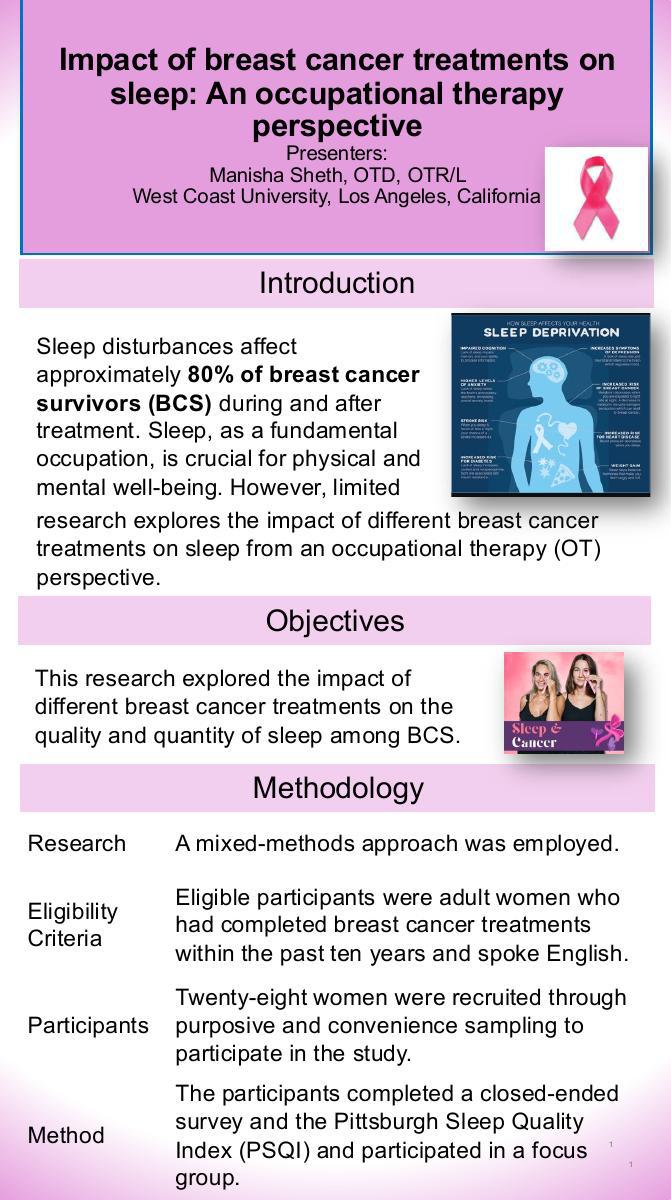
Introduction: Sleep disturbances affect approximately 80% of breast cancer survivors (BCS) during and after treatment. Sleep, as a fundamental occupation, is crucial for physical and mental well-being. However, limited research explores the impact of different breast cancer treatments on sleep from an occupational therapy (OT) perspective.
Objectives: This research explored the impact of different breast cancer treatments on the quality and quantity of sleep among BCS.
Methods: A mixed-methods design was employed. Participants were recruited through purposive and convenience sampling. Eligible participants were adult women who had completed breast cancer treatments within the past ten years and spoke English. Twenty-eight BCS completed a closed-ended survey and the Pittsburgh Sleep Quality Index (PSQI). Five participants participated in virtual interviews, with qualitative data analyzed through thematic coding. Trustworthiness was ensured through triangulation, saturation, member checking, and peer debriefing.
Results: Descriptive data analysis showed a significant decrease in the number of hours of sleep for BCS. Participants who underwent chemotherapy reported decreased sleep duration during chemotherapy compared to pre-treatment. Participants reported difficulty initiating and maintaining sleep, increased fatigue, and reliance on prescription or over-the-counter sleep aids. Thematic analysis identified four key challenges: (1) side effects of treatments affecting sleep, (2) disrupted sleep cycles, (3) persistent fatigue, and (4) psychological distress impacting sleep quality.
Conclusion: Breast cancer treatments significantly impact sleep, underscoring the need for OT interventions that address sleep as an occupation. OT practitioners can enhance BCS's overall well-being and recovery by developing strategies to improve sleep hygiene, manage fatigue, and promote mind and body relaxation techniques. Future research should explore the effectiveness of OT-led interventions in mitigating sleep disturbances and improving quality of life post-treatment.