
Introduction
In this study, we investigated the characteristics of the health-related quality of life of family members living by disease among home-visit rehabilitation users using the SF12.
Objectives and Methods
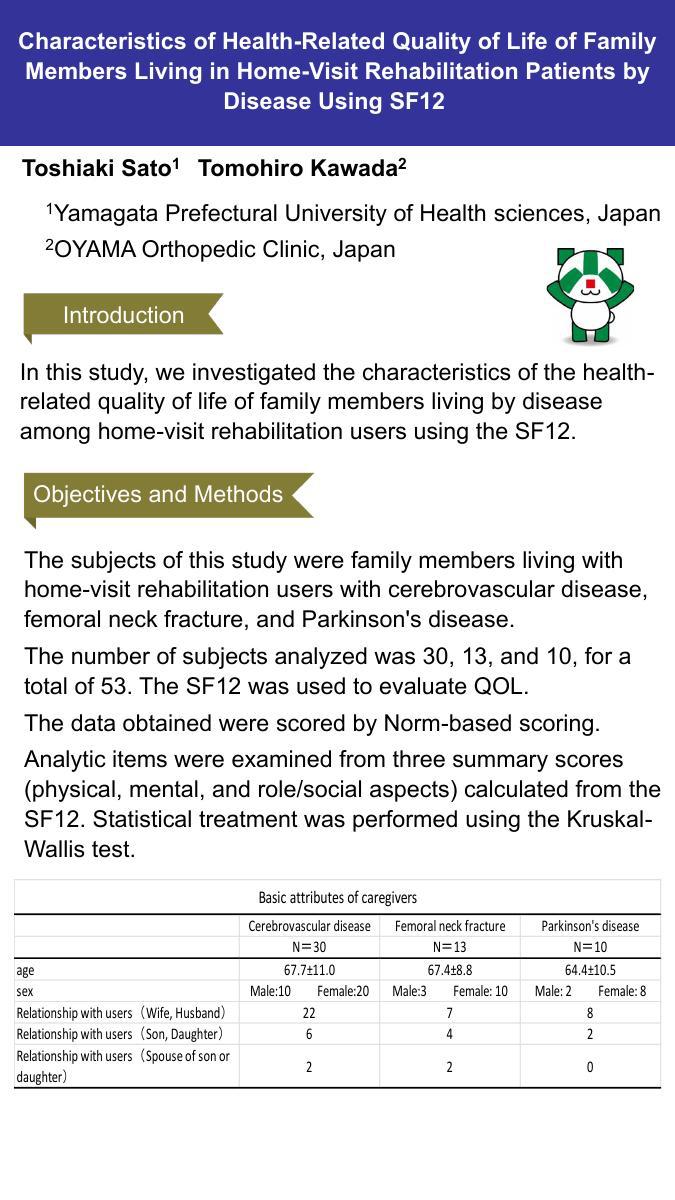
The subjects of this study were family members living with home-visit rehabilitation users with cerebrovascular disease, femoral neck fracture, and Parkinson's disease. The number of subjects analyzed was 30, 13, and 10, for a total of 53. The SF12 was used to evaluate QOL. The data obtained were scored by Norm-based scoring. Analytic items were examined from three summary scores (physical, mental, and role/social aspects) calculated from the SF12. Statistical treatment was performed using the Kruskal-Wallis test.
Results
There were no marked differences in age and FIM among the three groups of home-visit rehabilitation users. The three groups of summary scores of physical aspects of health-related quality of life of family members living together were 53.3±11.3 for cerebrovascular disease, 51.6±9.6 for femoral neck fracture, and 45.0±15.3 for Parkinson's disease. Mental aspects were 50.7±5.9, 51.1±4.6, and 55.0±16.1, respectively. Role/social aspects were 42.5±11.5, 41.8±10.1, and 37.6±10.7, respectively. Role/social aspects were significantly lower than physical and mental aspects (p<0.05).
Conclusion
The approach to home rehabilitation is important not only for the patient, but also for the caregiver. It was found that the characteristics of the patient's disease reflected on the health-related quality of life of the caregivers.