
Introduction / Rationale: Research shows that parent-child interaction difficulties are strongly linked to challenges in parental psychological well-being. However, few studies have directly compared these interactions and their impact on psychological well-being between parents of typically developing (TD) children and those with neurodevelopmental disorders (ND), despite evidence indicating that these groups face different challenges.
Objectives: This study aims to compare parent-child interaction difficulties and psychological well-being between parents of TD children and those with ND and to examine the relationships between interaction challenges, parental self-efficacy, and psychological outcomes.
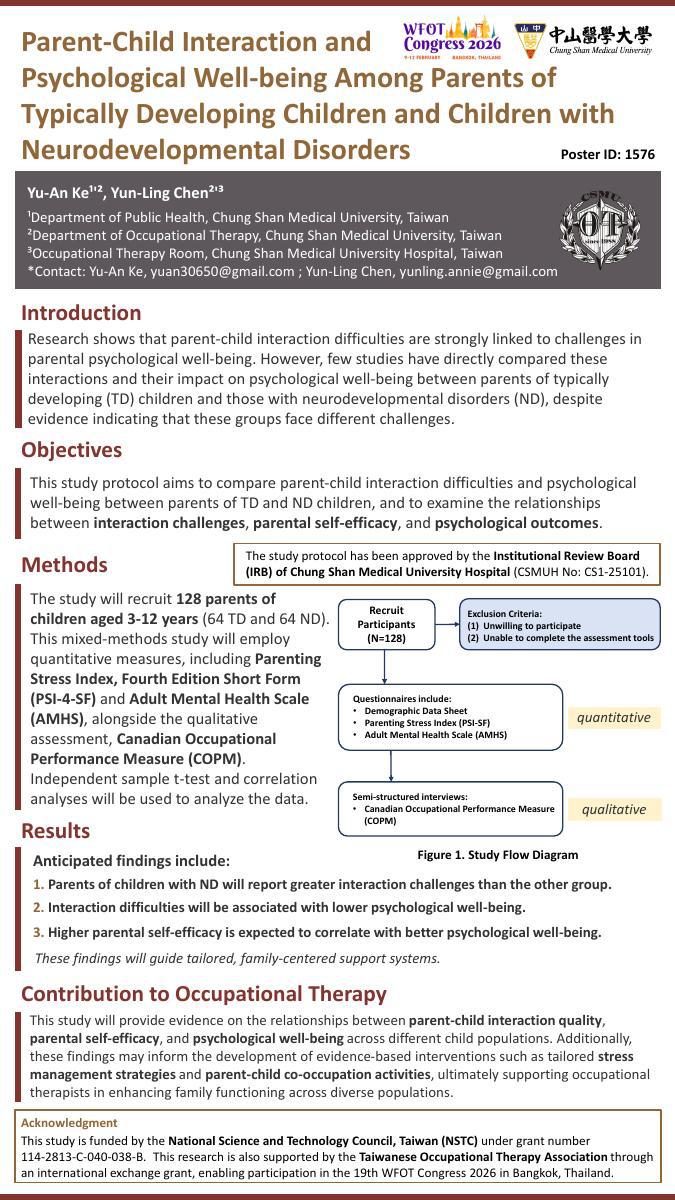
Methods / Approach: This mixed-methods study will employ quantitative measures, including Parenting Stress Index and Psychological Well-being Scale, alongside the qualitative assessment, Canadian Occupational Performance Measure (COPM). The study will recruit 128 parents of children aged 3-12 years (64 TD and 64 ND). Independent sample t-test and correlation analyses will be used to analyze the data.
Results / Practice Implications: Anticipated findings include: (1) parents of children with ND will report greater interaction challenges than the other group; (2) interaction difficulties will be associated with lower psychological well-being; and (3) higher parental self-efficacy is expected to correlated with better psychological well-being. These findings will guide tailored, family-centered support systems.
Conclusion / Contribution to the occupational therapy profession: This study will provide evidence for holistic, client-centered interventions in occupational therapy. The findings may inform occupational therapists to create individualized interventions such as stress management strategies and parent-child interaction techniques, and enhance family functioning across varied populations.