
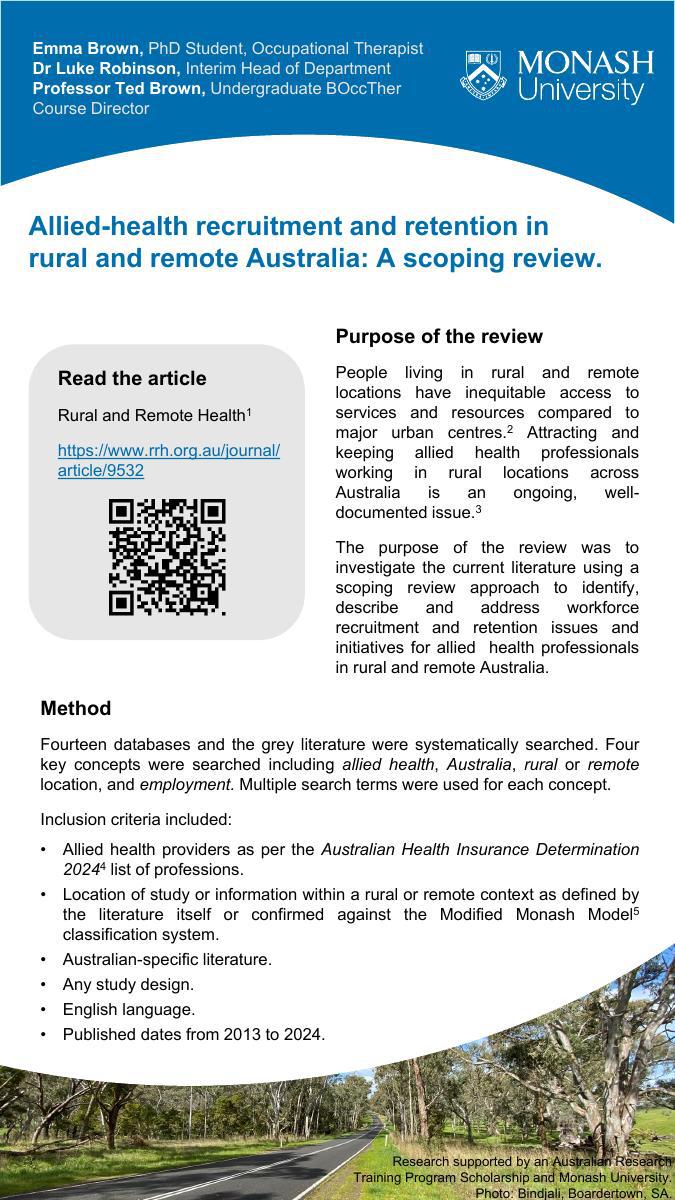
Introduction: People living in rural and remote areas are reliant upon a consistent workforce to meet their health needs. Attracting and maintaining a health workforce is a well-documented, ongoing issue. A review of the factors impacting the recruitment and retention of the allied health workforce is needed.
Objective: To explore workforce recruitment and retention issues faced by allied health professionals in rural and remote Australia.
Methods: The PRISMA Extension for Scoping Reviews guidelines were followed to search 14 databases and grey literature sources published between 2013 and 2024, focusing on the key concepts of allied health, recruitment/retention, rural/remote practice and Australia. The Crowe Critical Appraisal Tool and a narrative synthesis approach were used to appraise, summarise and synthesise the selected scoping review data.
Results: A total of 11,165 sources were found, with screening completed on 4,441. Sixty sources met the inclusion criteria, including 45 peer-reviewed sources and 11 specific to occupational therapy. The narrative synthesis yielded seven key themes: Workforce: Opportunities, facilitators and challenges; Rural health career: Professional and personal identity; Workplace and professional role: Demands, benefits and opportunities; Community and family: Support, care and connectedness; and Connection, Commitment and Collaboration.
Conclusion: The results highlight the opportunities, facilitators and challenges affecting the Australian allied health workforce. It informs recommendations for professionals, organisations, communities, and policymakers to build upon the sector’s strengths and resources and presents a range of innovative strategies being trialled and implemented by the allied health workforce, which may be relevant for Australian and international occupational therapy communities.